
Phone:
+86-139-5121-3963
Views: 0 Author: Site Editor Publish Time: 2026-07-29 Origin: Site


Complex appendectomies often involve perforated, gangrenous, or severely adherent tissues. These volatile conditions require precise, trauma-free primary abdominal entry every single time. Surgeons simply cannot afford the risks of blind insertions when facing such unpredictable acute environments. Traditional blind entry methods carry elevated risks of vascular and bowel injuries, especially in highly inflamed surgical fields. Direct visualization mitigates these severe risks immediately by allowing real-time monitoring. Making the right choice of a laparoscopic access trocar thus becomes a critical safety and operational decision for any surgical department. We provide procurement managers and surgical directors an evidence-based framework in the sections below. You will learn to balance clinical efficacy, patient safety, and per-procedure costs effectively. This guide helps you evaluate and select optical access devices with total confidence.
Clinical Imperative: Direct visualization during primary entry reduces risks of visceral injury, particularly in patients with previous abdominal surgeries or atypical anatomical presentations.
Size Matters: Selecting the right mix of 5mm and 10/12mm ports dictates the flexibility of the surgical approach and the size of the resulting fascial defect.
Cost Dynamics: Evaluating a disposable optical trocar requires looking beyond the unit price to the Total Cost of Procedure (TCP), factoring in operating room (OR) setup time and infection control.
Selection Logic: Successful procurement relies on standardizing evaluation criteria—lens clarity, thread design for retention, and ergonomic insertion force.
Acute care surgery presents highly unpredictable environments. You might encounter retrocecal appendicitis. You could face severe localized peritonitis. In these urgent scenarios, initial access dictates the entire procedure flow. A poor entry complicates everything. A clean entry sets up a smooth operation.
Optical technology offers a massive visualization advantage. Surgeons dissect tissue layers under direct camera monitor guidance. They easily identify the peritoneum visually. They avoid adherent bowel loops safely. Blind entry simply cannot provide this security level. Direct vision allows careful navigation through inflamed abdominal wall layers. It provides absolute certainty before entering the peritoneal cavity.
Hospitals measure success through strict clinical and commercial criteria. Clinically, you want zero primary entry complications. You also demand minimal tissue trauma to ensure faster patient recovery. Commercially, facilities require a highly predictable supply chain. They need reduced OR turnover time between urgent cases. They also want lower ongoing expenses compared to maintaining complex reusable systems. Reusable systems bring hidden maintenance burdens. Disposables remove many of these daily operational hurdles.
Many facilities fail to standardize their entry protocols. Allowing surgeons to alternate between blind and optical entries creates inconsistent safety records. Standardizing on optical entry for all acute cases reduces variability. It builds a robust safety culture.
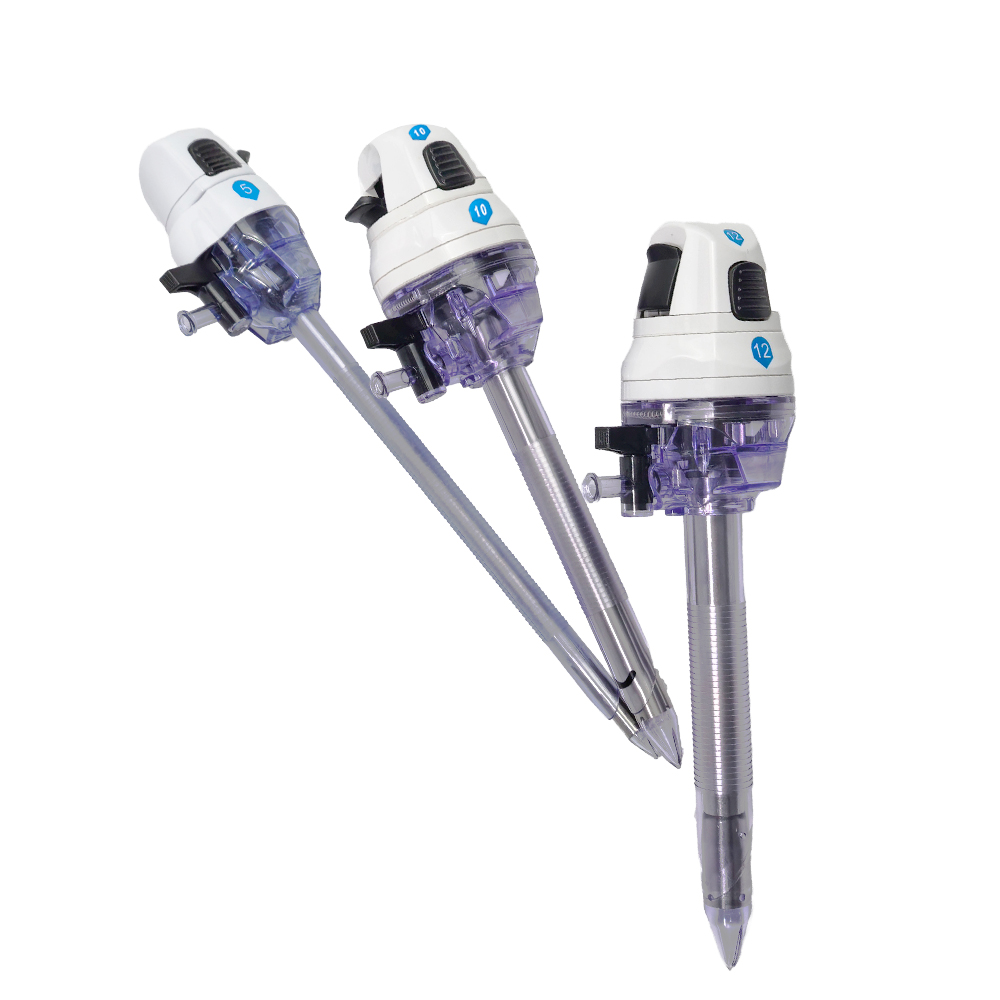
Most laparoscopic appendectomies utilize a standard three-port technique. Your primary optical port size matters immensely. It directly impacts instrument compatibility. It also dictates your subsequent fascial closure requirements.
Let us examine the 5mm optical trocar. These smaller devices work best for pediatric cases. They suit highly cosmetic surgical approaches perfectly. They also serve well as secondary working ports. You still get excellent visualization during insertion. However, they possess clear limitations. You cannot accommodate standard 10mm staplers. You also cannot pass larger endobags through them. Severely inflamed appendices demand these larger extraction tools.
Next, consider the 10mm or 12mm configurations. These are ideal for primary umbilical access. They allow insertion of a standard 10mm laparoscope. This provides superior lighting and optimal surgical visibility. You can seamlessly introduce automated stapling devices later. A vital clinical consideration exists here. You must perform careful fascial closure. Proper fascial closure prevents post-operative port-site hernias. Surgeons must suture any defect larger than 10mm meticulously.
| Port Size | Primary Best Use | Instrument Compatibility | Closure Requirement |
|---|---|---|---|
| 5mm | Pediatric, Cosmetic, Secondary Ports | 5mm scopes, graspers, scissors | Skin closure only (typically) |
| 10mm | Standard Adult Primary Access | 10mm scopes, standard clip appliers | Fascial suturing required |
| 12mm | Complex Adult Access | Automated staplers, large endobags | Strict fascial suturing required |
How do you approach optical trocar selection effectively? You must evaluate four core dimensions rigorously. Failing to assess these elements leads to poor purchasing decisions.
First, assess visualization clarity and lens design. You must evaluate the distal tip transparency. Smudging or fogging upon entry is unacceptable. It completely invalidates the device purpose. Look for designs offering crystal-clear camera integration. They must accommodate standard 0-degree and 30-degree scopes seamlessly.
Second, prioritize tissue separation over cutting. Bladeless technology represents the current gold standard. Prioritize bladeless, dilating tips. They separate muscle fibers rather than cutting them.
This action reduces site bleeding significantly.
It accelerates postoperative patient recovery.
It minimizes the risk of vascular injury during insertion.
It creates a smaller, more easily healed fascial defect.
Third, analyze fascial retention features. Look closely at the thread and cannula design. Evaluate the exterior ridge or thread patterns. The device must resist slipping during active use. It cannot "back out" during frequent instrument exchanges. Complex cases require constant tool swapping. A dislodged port causes loss of pneumoperitoneum. This delays the surgery unnecessarily.
Finally, test the ergonomics and insertion force. Assess the proximal handle design carefully. Lower insertion force allows for highly controlled entry. This prevents sudden plunging into the abdominal cavity. Sudden plunging causes catastrophic visceral injuries. A comfortable, secure grip ensures steady, predictable penetration through the fascia.
Purchasing departments must analyze prices comprehensively. You must weigh unit cost against the Total Cost of Procedure (TCP). Do not simply look at the sticker price.
Reusable or reposable systems look cheaper initially. They offer lower per-unit material costs over time. However, they incur heavy hidden costs. You pay for sterilization processing constantly. Component wear and lens degradation occur frequently. Staff labor adds up quickly. Damaged seals lead to gas leaks during surgery. Replacing these small parts creates logistical headaches.
Conversely, consider the disposable optical trocar model. These carry a higher upfront unit cost. Yet, they guarantee pristine optical clarity every single time. They present zero cross-contamination risk. They require zero Central Sterile Services Department (CSSD) dependency. You open a sterile package and operate immediately.
You should leverage volume pricing and vendor consolidation. Expect tiered pricing based on annual volume commitments. Evaluate bundled contracts proactively.
Bundle primary optical access ports alongside secondary standard ports.
Negotiate bulk purchasing discounts for your entire surgical network.
Lock in multi-year agreements to stabilize supply chain pricing.
Prepare a strong Value-Analysis Committee (VAC) justification. Frame the return on investment clearly. Focus on reduced OR setup time. Highlight the complete elimination of sterilization bottlenecks. Emphasize the mitigation of costly entry-related complications. A single avoided bowel injury easily pays for hundreds of disposable units.
Successful procurement requires rigorous implementation and real-world trialing. Do not select devices based on marketing spec sheets alone.
Establishing a clinical trial is mandatory. Mandate a strict 30-day clinical evaluation period. Run this trial directly in the acute care surgery department. Gather real feedback from the surgeons facing complex appendectomies daily. Their hands-on experience reveals critical device flaws.
Develop robust evaluation scorecards. Have surgeons rate devices objectively using a standardized point system.
Assess entry smoothness during primary insertion.
Measure image distortion at the distal transparent tip.
Evaluate port stability during rapid instrument exchanges.
Check valve integrity to ensure zero pneumoperitoneum leakage.
Supply chain resilience is equally important. Audit the vendor's fulfillment history thoroughly. Acute care requires uninterrupted stock availability. Backorders cripple emergency surgical departments. You must ensure your supplier maintains regional safety stock. They must guarantee rapid delivery times.
Execute clear next-step actions immediately. Request physical samples from your top three shortlisted vendors. Cross-reference their compatibility carefully. Ensure they fit existing hospital laparoscopes securely. Test them alongside your secondary ports. Verify locking mechanisms function perfectly before signing any purchase agreements.
Effective optical trocar selection is not a generic purchasing decision. It serves as a critical risk-management strategy for acute appendectomies. A thoughtful choice protects patients from devastating entry injuries.
We recommend balancing the upfront cost of disposable systems wisely. Weigh this against the immense clinical confidence gained. Flawless direct-vision entry and superior tissue retention offer undeniable value. They streamline procedures and reduce OR turnover times.
Engage your surgical leads early in the procurement process. Define acceptable insertion forces together. Establish clear visualization standards before soliciting vendor RFPs. This collaborative approach ensures optimal clinical outcomes and financial responsibility.
A: Prices vary based on region, volume contracts, and bundled agreements. Typically, they range from $40 to $120+ per unit. Facilities purchasing higher volumes or bundling these devices alongside secondary ports usually secure pricing at the lower end of this spectrum.
A: No. It significantly reduces risk via direct visualization, but it does not eliminate it entirely. Surgical technique remains paramount. Surgeons must still apply controlled force and recognize anatomical landmarks accurately to ensure absolute patient safety.
A: These devices usually accommodate standard 5mm or 10mm rigid laparoscopes. However, you should always verify the specific length and locking mechanisms. Mismatched equipment causes scope instability and poor visualization during abdominal entry.
A: Bladeless tips separate tissue fibers rather than severing them. Clinical evidence shows this approach reduces fascial defects. It lowers site bleeding significantly. It also decreases the overall incidence of post-operative port-site herniation.


