
Phone:
+86-139-5121-3963
Views: 0 Author: Site Editor Publish Time: 2026-09-24 Origin: Site


Surgical department heads, procurement officers, and clinical evaluators face intense pressure to secure reliable surgical stapling solutions. We know operating rooms demand flawless instrument performance. You need devices you can trust implicitly. A linear cutter reload serves as the critical backbone of many complex procedures. It acts as a disposable cartridge containing multiple staggered rows of titanium staples. Typically, it also houses a fresh surgical blade. The cartridge snaps seamlessly into a reusable or single-patient-use stapler handle.
Choosing the right reload goes far beyond simple supply chain logistics. This crucial decision directly impacts hemostasis at the surgical site. It dictates anastomosis integrity. Ultimately, it determines patient outcomes and recovery speeds. In this article, you will learn the core functions of these advanced devices. We will explore key differences between open and endoscopic platforms. Finally, we will provide an actionable framework. This framework helps you evaluate suppliers and ensure clinical safety across your surgical teams.
Primary Function: Used for simultaneous tissue transection, resection, and anastomosis in gastrointestinal, thoracic, and bariatric procedures.
Tissue Specificity: Reloads are color-coded based on staple leg length to accommodate specific tissue thicknesses (e.g., vascular, standard, thick tissue).
Technological Differentiators: Premium reloads feature standardized "B-shape" staple formation and integrated safety lockouts to prevent empty misfires.
Strategic Sourcing: Evaluating an endo stapler reload versus an open surgery reload requires distinct criteria spanning compatibility, articulation capabilities, and clinical compliance.
Hospitals must constantly balance operating room efficiency against uncompromising patient safety. Tissue transection demands absolute precision. Clinical teams rely on advanced stapling devices to achieve this critical balance. A linear cutter reload solves this complex business problem. It combines multiple surgical steps into one fluid, reliable action.
Surgeons primarily use these devices to create secure anastomoses. They also close organ stumps and transect tissue simultaneously. Previously, surgeons spent significant time manually suturing and cutting. Now, a surgeon simply fires the reload. The device deploys parallel rows of staples. Simultaneously, a blade slices down the middle of the staple lines. This simultaneous action saves valuable operative time. It also significantly reduces the time a patient spends under anesthesia.
We see these devices utilized heavily across several key surgical disciplines:
Gastrointestinal (GI): They remain essential for bowel resections and gastric bypasses. The device ensures strict luminal continuity. It prevents dangerous bowel content leakage into the abdominal cavity.
Thoracic: Surgeons routinely utilize them during lung wedge resections and lobectomies. They securely seal bronchial tubes and pulmonary vessels. Lungs require absolute airtight seals to prevent postoperative complications.
General and Bariatric: They are critical for sleeve gastrectomies. Surgeons rely on long, continuous staple lines. They safely reshape the stomach while maintaining tissue viability.
A successful reload application must meet stringent success criteria. First, it must achieve a leak-proof seal. We evaluate this as absolute pneumostasis in lungs and hemostasis in highly vascular areas. Furthermore, the reload must minimize tissue trauma. Crushing the tissue too tightly causes localized necrosis. The staple line must maintain adequate perfusion. Proper blood flow promotes healthy, rapid cellular healing.
Best Practice: Always allow a brief pause (typically 15 seconds) after clamping the tissue before firing. This pause allows interstitial fluid to exude from the compressed tissue. It ensures a much more secure and uniform staple formation.
Procurement teams often navigate two major solution categories. You must clearly differentiate between open surgical requirements and minimally invasive endoscopic needs. Each surgical approach demands specific cartridge architecture. You cannot interchange them.
When evaluating an endo stapler reload, you will notice highly specialized characteristics. Manufacturers design these specifically for laparoscopic access. They easily pass through standard surgical trocars. Most models accommodate 12mm or 15mm access ports. Furthermore, they frequently feature articulating heads. Many models can angle up to 45 degrees in multiple directions. This articulation provides surgeons with superior access. It proves crucial when navigating confined anatomical spaces. Surgeons rely on this articulation during deep pelvic cavity procedures or within the narrow thoracic vault.
Conversely, open linear cutter reloads follow a different design philosophy. Clinical teams use them during traditional laparotomy or thoracotomy procedures. They possess a rigid, straight profile. The design optimizes them for wider jaws. They effectively manage much longer tissue lines. You will commonly find these cartridges in 60mm, 80mm, and 100mm lengths. They handle bulky tissue masses without the physical constraints of trocar dimensions. Trauma surgeons often prefer them for rapid bowel resections during emergencies.
Your primary decision driver involves strict structural matching. You must align the reload architecture accurately to the surgical approach. Furthermore, verify compatibility against your facility's contracted stapling handle platform. Mismatched components cause dangerous procedural delays.
Common Mistake: Do not assume all 12mm trocars universally accept every endoscopic reload. Always verify the outside diameter specifications. Slight variances between manufacturers can cause the reload to jam inside the port.
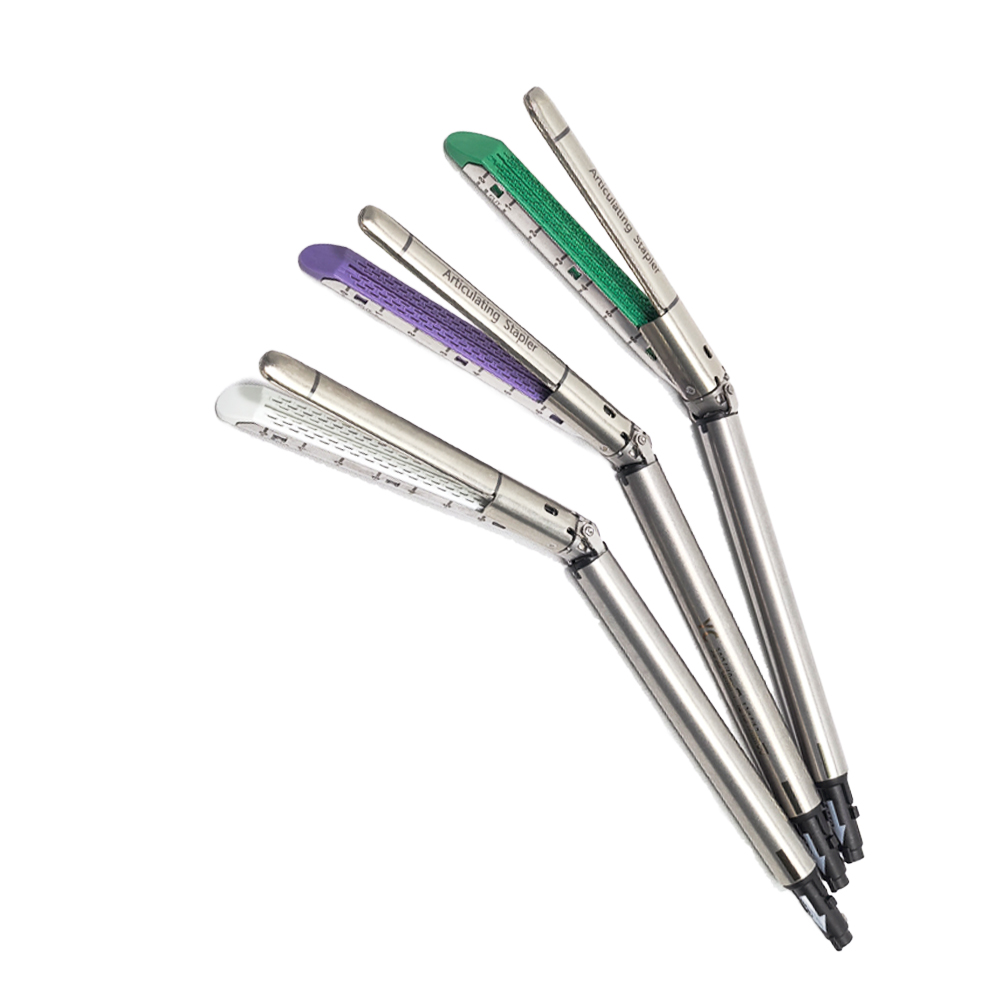
Selecting the best device requires a close look at evaluation dimensions. You must connect specific physical features to measurable clinical outcomes. Procurement is not just about price points. It involves securing reliable technology for your clinical staff.
Tissue thickness adaptation stands as the most critical variable. Surgeons cannot use a universal staple size. Tissues vary wildly in density and thickness across the human body. The medical industry utilizes a universal color-coding system. It relies on staple leg length to prevent catastrophic surgical failures.
Standard Tissue Color-Coding Chart
| Color Code | Target Tissue Application | Example Anatomical Structures | Closed Staple Height (Approx) |
|---|---|---|---|
| White / Grey | Vascular and ultra-thin tissue | Pulmonary vessels, thin mesentery | 1.0 mm |
| Blue | Standard tissue | Stomach, healthy bowel tissue | 1.5 mm |
| Green / Black | Thick or diseased tissue | Distal stomach, fibrotic lungs | 2.0 mm |
Beyond color-coding, staple formation technology dictates healing success. Look for an evidence-oriented focus on predictable B-shape staple formation. A perfect B-shape secures the tissue firmly. Importantly, it does not crush it. This specific shape allows necessary blood flow to pass through the staple line via capillary action. Adequate perfusion drives rapid healing. It prevents the staple line from breaking down post-operatively.
Next, carefully assess blade sharpness and integration. Premium systems integrate a new, pre-sterilized knife blade directly into every cartridge. A fresh blade ensures clean cuts during every single fire. It drastically reduces tissue dragging. Dragging tears delicate healing margins. Torn margins severely compromise the anastomosis and increase leak risks.
Finally, examine the cartridge face. Advanced models utilize stepped cartridge faces. This gripping technology reduces lateral tissue slippage during firing. It keeps the targeted tissue securely clamped exactly where the surgeon intends. When tissue slips, staple lines become uneven. Stepped faces eliminate this unpredictable variable.
Rolling out new stapling technology involves specific implementation considerations. We must actively address compatibility risks. We must also reinforce patient safety protocols across the entire surgical department.
Cross-brand compatibility poses a significant hazard in today's operating rooms. Mixing generic reloads with proprietary stapler handles creates immense danger. Even if a cartridge physically clicks into place, slight dimensional variances disrupt staple formation. We strongly emphasize following original equipment manufacturer (OEM) recommendations. Always demand FDA and CE compliance documentation. Unauthorized mixing voids warranties. More importantly, it jeopardizes patient lives.
Clinical teams also face the severe "wrong size" risk. Selecting an inappropriate color code carries immediate clinical consequences.
Under-sizing the Cartridge: Using a blue reload on thick fibrotic tissue crushes the specimen. This extreme compression causes tissue necrosis. The staple line will eventually fail, leading to massive internal leaks.
Over-sizing the Cartridge: Using a green reload on thin vascular tissue leaves dangerous gaps. The staple legs do not close tightly enough around the vessel. This directly leads to inadequate hemostasis. The patient will suffer from severe postoperative bleeding.
Modern devices mitigate operator error through intelligent safety lockout mechanisms. An empty-cartridge lockout feature remains absolutely mandatory. Once a surgeon fires the reload, the handle locks securely. It prevents the surgeon from accidentally re-firing a spent reload onto new tissue. Firing an empty cartridge simply slices the organ open without sealing it. This essential lockout prevents catastrophic surgical hemorrhages.
Lastly, consider staff adoption and ergonomics. Introducing new firing mechanisms presents a learning curve for everyone. Manual staplers require significant hand strength and smooth squeezing motions. Powered staplers require nuanced button controls and battery management. Proper reload seating procedures demand tactile feedback. You must allocate adequate time for robust nursing and surgeon education before going live.
Supply chain resilience matters just as much as clinical performance. We recommend utilizing a structured shortlisting logic when evaluating potential vendors. You need partners who deliver quality consistently.
Start with thorough regulatory and quality audits. You must verify essential certifications before reviewing any products. Request current ISO 13485 certificates. Review FDA 510(k) clearances and active CE marks. These documents prove the manufacturer adheres to strict global quality standards. Do not accept expired or pending documentation.
Next, demand strong clinical evidence. Glossy marketing brochures are insufficient for clinical decisions. Request peer-reviewed data. Ask for clinical trial summaries demonstrating staple line integrity. The data must show low postoperative leak rates across large patient cohorts. Vendors confident in their product will gladly provide these detailed case studies.
Evaluate supply chain resiliency closely. Look deeply at the vendor's backorder history. Surgeries halt immediately if you lack specific color codes. Assess their ability to consistently supply all variations. A reliable supplier maintains healthy buffer stocks. They manage global logistics efficiently. They protect your hospital from sudden shortages.
Once you narrow your list, take actionable next steps. Arrange a wet-lab demonstration. Conduct a clinical trial period with your lead surgeons. Hands-on evaluation reveals functional nuances. Surgeons will notice tactile feedback, articulation smoothness, and handle ergonomics. Bench testing builds necessary clinical consensus before final procurement.
A surgical reload represents a critical variable in operative success. It dictates the safety of the most vulnerable moments in the operating room. Choosing the correct tissue-specific matching remains paramount for every patient. You must prioritize predictable B-shape staple formation above all else. Reliable tissue perfusion guarantees better healing.
Cost-savings should never supersede reliability. An inferior staple line results in complications far more devastating than a premium cartridge. Patient safety always comes first. We encourage clinical procurement committees to act decisively. Request sample evaluations immediately. Secure clinical data packets from vetted manufacturers. Empower your surgical teams with instruments that consistently deliver flawless hemostasis and secure anastomoses.
A: Standard OEM guidelines usually allow the handle to be reloaded 7 to 8 times per patient. This applies strictly to a single procedure. Always consult the specific manufacturer's instructions for use. Exceeding this limit degrades the firing mechanism and compromises staple formation.
A: No. Most are highly proprietary. Manufacturers design them exclusively for their specific handles. While some generic brands offer compatible lines, we strongly advise strict regulatory verification. Mixing unverified brands can lead to misfires and severe patient safety risks.
A: Modern staplers feature a safety lockout mechanism designed to prevent empty fires. If you attempt to re-fire a spent reload, the instrument locks. If a misfire somehow occurs, strict clinical protocols dictate immediately replacing the cartridge and assessing the site.
A: Including a pristine cutting edge ensures a sharp, clean transection every time. A dull blade drags and tears tissue. This severely compromises the healing margins. A fresh blade guarantees surgical precision, minimizes localized trauma, and supports optimal patient recovery.


