
Phone:
+86-139-5121-3963
Views: 0 Author: Site Editor Publish Time: 2026-07-19 Origin: Site


Thyroid and parathyroid surgeries present a high-stakes clinical challenge. Surgeons must achieve flawless hemostasis in a highly vascular operative field. They also face the delicate task of protecting the recurrent laryngeal nerve (RLN) and the fragile parathyroid glands. Traditional clamp-and-tie techniques often fall short in these tight spaces. They consume valuable operative time and clutter the surgical site. Standard electrocautery poses significant risks as well. It carries unpredictable thermal spread that can permanently damage critical structures in the neck.
Advanced energy devices now bridge this dangerous gap. They provide reliable sealing without the erratic energy flow of older tools. This article provides hospital procurement teams and clinical directors with an objective evaluation framework. We examine these devices based on clinical efficacy, operational efficiency, and upfront financial impact. You will learn how modern instruments outperform conventional methods in standard and complex cases. We will guide you through evidence-based outcomes, essential system features, and practical procurement calculations to support your institution.
Precision: Ultrasound scalpels typically limit lateral thermal spread to 1.5mm–2.0mm, reducing the risk of adjacent nerve or gland damage.
Efficiency: Clinical consensus demonstrates a reduction in overall operative time by 15–30 minutes per total thyroidectomy compared to traditional hemostasis.
Economic Offset: While the per-procedure cost of ultrasonic shears is higher, the expense is frequently offset by reduced OR time and lower rates of post-operative complications.
Evaluation Criteria: Procurement should prioritize generator compatibility, ergonomic feedback, vessel-sealing reliability (up to 5mm), and handpiece lifespan.
Operating in the deep cervical space challenges even the most experienced surgical teams. The neck contains dense vascular networks wrapped closely around vital nerves. We must navigate this confined anatomy with extreme caution.
Conventional electrocautery relies on electrical current passing through patient tissue. This creates erratic current spread along fascial planes. Such unpredictability carries a high risk of thermal injury to the RLN. A minor slip or stray spark can cause permanent vocal cord damage. Knot-tying presents a different mechanical hurdle. Manually tying off the superior thyroid pedicle is highly time-consuming. Deep ties can easily slip, and they leave foreign suture material behind in the healing tissue.
An ultrasonic scalpel system entirely eliminates stray electrical currents. It uses a piezoelectric transducer inside the handpiece. This creates high-frequency mechanical vibration. The blade tip vibrates precisely at 55,500 Hz. This rapid motion denatures tissue proteins and coagulates them instantly. It forms a sticky, secure coagulum to seal the vessel. No electrical current passes through the patient. You achieve perfect hemostasis through mechanical friction rather than electrical burns.
Modern patients frequently request minimal scarring. This demand has fueled the rise of remote-access thyroidectomies. Surgeons now utilize transoral or axillary approaches to reach the thyroid bed. These pathways require tunneling through narrow spaces. Traditional open instruments simply cannot navigate these tight angles. Facilities now rely heavily on the laparoscopic ultrasonic scalpel. These extended-shaft devices maneuver effortlessly within restricted working spaces. They deliver the same reliable hemostasis while preserving the cosmetic goals of the procedure.
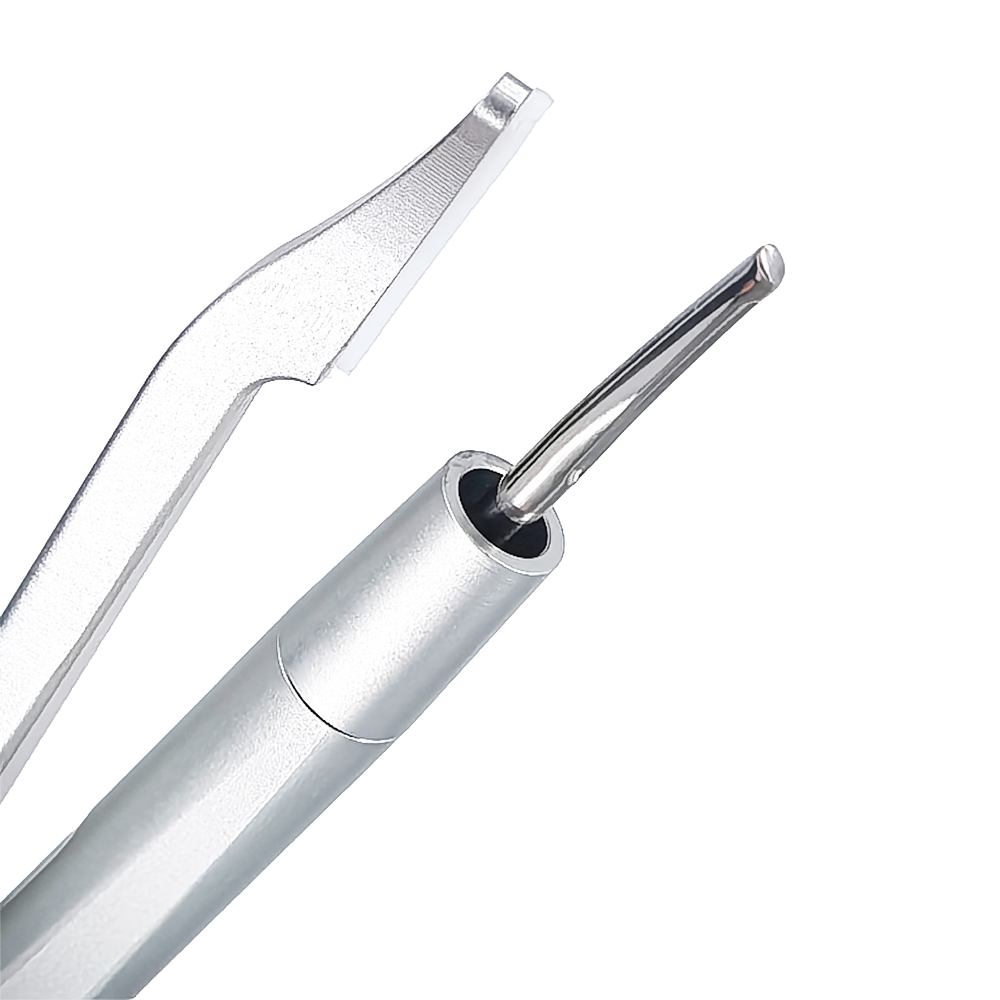
Hospital procurement teams face numerous device options. You must know exactly which technical specifications matter most. Focus on features that directly impact patient safety and surgical workflow.
Lateral Thermal Spread Control: Heat management dictates nerve safety. Assess the specific millimeter radius of heat dissipation. Devices must explicitly state thermal spread metrics for safe usage near the RLN. Look for a guaranteed thermal spread limited to 1.5mm to 2.0mm.
Vessel Sealing Capacity: The neck features robust blood flow. The standard requirement is reliable burst-pressure sealing for arteries and veins. Ensure the device safely seals vessels up to 5mm in diameter. It should routinely withstand physiological blood pressure without re-bleeding.
Blade Design and Ergonomics: Surgeons hold these tools for hours. Design impacts their physical fatigue.
Curved vs. Straight tips: Curved tips naturally follow the curved tissue planes of the thyroid bed. They offer much better visualization and blunt dissection capability.
Trigger mechanisms: Surgeons rely on tactile feedback. They need distinct, easy-to-reach triggers for cutting versus coagulating. Good ergonomics prevent hand cramping.
Generator Footprint and Compatibility: Operating rooms suffer from equipment clutter. Assess your spatial needs. Decide whether the hospital requires a standalone ultrasonic generator or a dual-energy platform. Dual platforms combine ultrasonic and advanced bipolar functions in one box. They save space and simplify cart management.
Healthcare institutions demand data before adopting new technology. The clinical benefits of ultrasonic energy devices are well documented. They improve both the speed and safety of glandular surgery.
Operating room time is incredibly expensive. We must quantify OR efficiency gains accurately. Less time spent on manual instrument exchanges speeds up the workflow. Skipping repetitive knot tying directly increases surgical throughput. Clinical consensus demonstrates a solid reduction in operative time. You save 15 to 30 minutes per total thyroidectomy. Over a full day, this allows departments to schedule an additional case.
A dry surgical field prevents anatomical confusion. Ultrasonic devices provide a substantial reduction in intraoperative bleeding. They seal vessels rapidly before blood obscures the view. This significantly lowers post-operative hematoma risks. A neck hematoma is a life-threatening airway emergency. Reliable sealing frequently eliminates the need for surgical drains. Patients experience less pain and go home faster without drains.
We must evaluate outcomes critically. Energy devices alter complication profiles significantly.
Transient vs. Permanent Hypocalcemia: The parathyroid glands require a delicate, intact blood supply. Ultrasonic precision improves the preservation of these tiny vessels. This drastically reduces the rates of permanent hypocalcemia.
Vocal Cord Paralysis: The RLN controls the vocal cords. We see a decreased incidence of transient RLN paresis when surgeons respect safety margins. You must always maintain a visual safety gap of more than 2mm from the nerve.
Clinical Outcomes Comparison: Traditional vs. Ultrasound Devices
| Clinical Metric | Traditional Clamp-and-Tie | Ultrasound Energy Device |
|---|---|---|
| Operative Time | Standard baseline | Reduced by 15–30 minutes |
| Blood Loss | Moderate | Significantly reduced |
| Thermal Spread | Erratic (if using electrocautery) | Highly controlled (1.5mm–2.0mm) |
| Drain Usage | Frequently required | Rarely required |
No surgical tool is flawless. Responsible procurement requires evaluating the downsides. We must examine these devices through a skeptical lens to ensure safe implementation.
Ultrasonic devices lack stray electrical currents. However, they generate intense friction. The active blade tip can easily exceed 200°C during prolonged activation. While lateral spread remains low, the direct contact heat is extreme. Accidental touch to the RLN immediately post-activation causes severe thermal damage. Surgeons must actively cool the blade by touching it to nearby muscle before working near nerves.
Skill translation is not automatic. Transitioning from tactile knot-tying to energy-based tissue tension requires dedicated training. Surgeons must learn proper traction techniques. Applying too much tension causes the vessel to tear before it seals. They must also learn correct activation times. Rushing the cut leads to immediate bleeding.
Friction generates smoke. Over-activation without sufficient tissue between the jaws causes problems. It can lead to minor tissue charring. It also generates a fine smoke plume that fogs the camera during endoscopic cases. Operating rooms require efficient smoke evacuation protocols to maintain clear visibility.
Modern surgical efficiency relies on single-use items. This creates total dependence on disposable ultrasonic shears. Limited-repose options exist, but they still degrade over time. This reliance introduces supply chain vulnerabilities. A local backorder can halt your entire endocrine surgery schedule. Facilities must maintain robust backup inventories to mitigate this risk.
Financial realities govern hospital operations. Decision-makers must look beyond the sticker price. You need a comprehensive view of the initial outlay versus the long-term clinical savings.
Starting an energy program requires upfront capital. The main generator and reusable transducers constitute the bulk of this cost. Estimated costs typically range from $15,000 to $35,000+. This price fluctuates depending on the brand. Dual-energy platforms cost more initially but offer wider utility across different surgical specialties.
Disposable tools drive the ongoing budget. Per-procedure pricing for handpieces remains significant. Expect to pay between $300 to $600+ for each sterile device. High-volume centers should negotiate tiered pricing agreements. Securing a bulk contract helps stabilize these per-procedure expenses.
Evaluate these costs using Health Technology Assessment principles. Do not evaluate the shear price in isolation. Use a simple, practical formula for procurement analysis:
(Cost of Shears) - (Cost of Suture/Clips) - (Value of 20-30 mins OR Time) - (Cost of avoided bed days/complications) = Actual Procedure Financial Impact.
Operating room time costs heavily by the minute. Saving twenty minutes easily pays for the disposable instrument. Furthermore, avoiding a single post-operative hematoma saves thousands in intensive care costs. Studies routinely show a clear conclusion. A total thyroidectomy utilizing ultrasound technology is cost-neutral or cost-saving for the institution. You achieve this financial balance despite higher initial consumable prices.
The advanced energy device is no longer an optional luxury. It serves as the standard of care for high-volume thyroid and parathyroid centers. It delivers unmatched precision, protects delicate nerves, and shortens costly operative times.
We advise hospital decision-makers to pilot two or three different systems. Utilize objective bench data, such as thermal spread and burst pressure metrics. Combine this with subjective surgeon feedback regarding ergonomics and tactile jaw feedback.
Take action to upgrade your surgical suites. Request clinical evaluation units and detailed health-economic modeling from shortlisted manufacturers. Equipping your surgeons with these tools directly enhances patient safety and institutional efficiency.
A: No energy device is completely safe upon direct contact. Surgeons must maintain a minimum 2mm–3mm visual safety margin, as the active blade retains residual heat after deactivation.
A: While possible, standard open procedures typically utilize shorter shears (e.g., 9cm or 14cm). Laparoscopic models (36cm+) are reserved for endoscopic or robotic-assisted approaches due to handling ergonomics.
A: Lifespan varies by manufacturer, but most transducers are rated for 95 to 120 sterilization cycles before performance degrades and replacement is required.
A: No. Advanced energy devices and IONM are complementary technologies. The scalpel provides safe dissection, while IONM verifies nerve functional integrity.


