
Phone:
+86-139-5121-3963
Views: 0 Author: Site Editor Publish Time: 2026-09-04 Origin: Site


Medical professionals frequently interchange the terms "trocar" and "cannula" during fast-paced clinical operations. However, these terms refer to distinctly different components within a surgical access system. Why does this terminology matter? Accurate definitions ensure precise procurement and drastically reduce ordering errors for medical facilities. They perfectly align purchasing decisions with exact surgical requirements. A misunderstanding here can disrupt supply chains, complicate inventory management, and even delay critical minimally invasive procedures.
In this comprehensive guide, you will learn the anatomical and functional differences between these crucial instruments. We will explore various entry mechanisms, comparing their safety profiles and clinical efficacy. Finally, you will discover how to evaluate these devices against strict regulatory compliance standards. This knowledge empowers clinical buyers and surgical teams to optimize their laparoscopic toolkits confidently while ensuring patient safety during initial abdominal access.
A trocar is traditionally the entire assembly (or specifically the piercing obturator), while the cannula is strictly the hollow outer tube that remains in the patient.
The cannula maintains the surgical port and pneumoperitoneum, allowing other instruments to pass through.
Selecting the right trocar and cannula system requires evaluating tip mechanisms (e.g., optical vs. bladed) against procedural safety requirements and budget constraints.
Procurement teams must verify FDA classification (e.g., NGY) and manufacturing standards (ISO 13485) before supplier shortlisting.
To fully understand modern laparoscopic access, we must break down the specific components of the entry port. In historical contexts, the word "trocar" often described a simple, solid piercing tool. Today, the medical device industry uses these terms with much greater specificity to describe engineered, multi-part systems.
In the modern commercial market, a trocar typically refers to the entire assembled unit out of the package. This complete assembly includes three primary components: the obturator, the cannula, and the integrated seal system. When procurement teams order a trocar and cannula kit, they are sourcing this complete, ready-to-use unit. These three components function as a single, cohesive mechanism during the initial abdominal wall penetration.
The obturator is the internal, solid, or semi-hollow rod that physically pierces the tissue. Surgeons insert the obturator through the cannula before pushing the assembly into the abdomen. Its sole purpose is to create the initial entry pathway through the skin, muscle layers, and fascia. Once the surgeon successfully accesses the abdominal cavity, they immediately remove the obturator. It does not remain in the patient during the surgery. The design of the obturator tip dictates how much force the surgeon must apply and how much tissue trauma occurs during entry.
The cannula is the hollow outer sleeve. Once the surgeon withdraws the obturator, the cannula remains lodged in the abdominal wall for the duration of the procedure. It acts as a stabilized, continuous access port. The cannula serves two critical functions. First, it allows the smooth insertion and removal of various laparoscopic instruments, such as graspers and scissors. Second, it features a valve system (often a stopcock) designed to pump carbon dioxide into the abdomen. This maintains the insufflation gas pressure, creating a stable working space for the surgical team.
A successful access system relies on the perfect symbiotic fit between the obturator and the cannula. The manufacturing tolerances must be exceptionally tight. If the gap between the obturator's outer diameter and the cannula's inner diameter is too large, tissue can become trapped between them during insertion. This causes unnecessary trauma and increases insertion force. Furthermore, these two components must align perfectly to prevent insufflation gas from leaking prematurely. A well-designed system minimizes drag, limits patient trauma, and transitions smoothly from penetration to stable access.
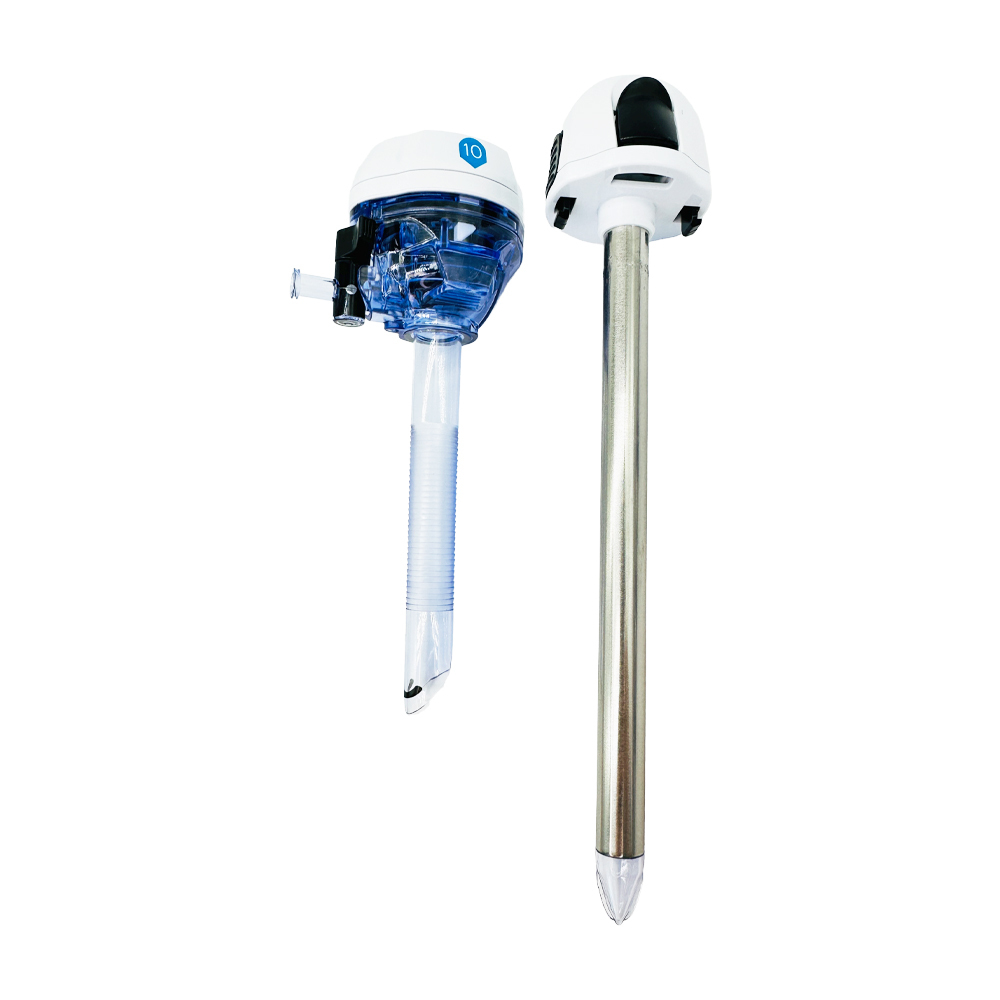
The mechanism used to breach the abdominal wall significantly impacts both patient safety and procedural efficiency. Manufacturers have developed distinct tip technologies to address different clinical challenges. Understanding these variations helps hospitals select the safest tools for specific surgical specialties.
A traditional bladed trocar features a sharp, flat, metal blade at the tip of the obturator. This design focuses on sheer cutting power.
Mechanism: The sharp blade slices cleanly through the fascia and muscle layers. Because it actively cuts rather than merely spreading tissue, it requires significantly less manual force from the surgeon during insertion. Many bladed models include a spring-loaded safety shield. This shield retracts during tissue resistance and snaps forward over the blade the moment it enters the empty abdominal cavity, theoretically protecting internal organs.
Clinical Reality: Bladed systems offer rapid tissue penetration. They are highly efficient for straightforward entries. However, they carry an inherent risk known as "blind entry." Because the blade cuts before the surgeon can see inside, there is a distinct risk of unintended visceral or vascular injury, especially in patients with prior abdominal surgeries and internal scarring.
An optical trocar abandons the metal blade entirely in favor of direct visualization.
Mechanism: This device features a hollow, bladeless, transparent plastic tip. The surgeon inserts a laparoscope (a specialized camera) directly into the obturator before penetrating the skin. As the surgeon pushes the device into the abdomen, the bladeless tip separates and dilates the tissue fibers rather than cutting them.
Clinical Reality: The primary advantage is real-time visibility. The surgeon watches the monitor and identifies each distinct tissue layer—subcutaneous fat, fascia, muscle, and peritoneum—as the device advances. This visual feedback dramatically mitigates the risks associated with blind entries. Surgeons can immediately spot and avoid underlying blood vessels or adherent bowels.
Clinical Outcome: Optical systems typically reduce major access complication rates in complex procedures. Because they dilate rather than cut, patients often experience smaller fascial defects, which can reduce the incidence of post-operative port-site hernias.
Table: Comparison of Bladed vs. Optical Port Systems
| Feature | Bladed Systems | Optical Systems |
|---|---|---|
| Tip Design | Sharp, flat metal blade | Transparent, bladeless dilating tip |
| Tissue Interaction | Cuts through fascia and muscle | Separates and dilates tissue fibers |
| Visibility During Entry | Blind entry (no visualization) | Real-time layer-by-layer visualization |
| Insertion Force | Low force required | Moderate to high force required |
| Risk Profile | Higher risk of vascular/visceral injury | Lower risk of blind-entry injuries |
Choosing the correct equipment extends beyond merely picking a tip design. Hospital procurement teams and surgical committees must evaluate the operational, mechanical, and safety dimensions of these access systems to ensure they meet modern clinical demands.
Medical facilities must decide between fully disposable, fully reusable, or hybrid (reposable) access systems based on strict clinical workflows and infection control protocols.
Single-Use Systems: These devices arrive sterile and are discarded immediately after one procedure. They guarantee peak mechanical performance, maximum blade sharpness, and absolute sterility for every patient. They eliminate cross-contamination risks entirely.
Reusable Systems: These consist of durable metal components. After surgery, hospital staff must dismantle, meticulously clean, and sterilize them. While durable, these complex instruments feature tiny valves and crevices where microscopic bioburden can hide, demanding rigorous cleaning validation.
Reposable Systems: These hybrid models pair a reusable metal cannula with a single-use disposable obturator. This ensures a fresh, high-performing piercing tip for every surgery while maintaining a durable working channel.
During a laparoscopic procedure, the abdomen remains inflated with carbon dioxide gas. The access system must hold this gas inside while allowing tools to pass in and out. You must evaluate the internal seal's capability to maintain this pneumoperitoneum.
A poor seal will leak gas, causing the surgical working space to collapse. Conversely, a seal that grips instruments too tightly will create a high friction ratio. High friction causes excessive drag. When a surgeon struggles against drag, it accelerates hand fatigue and compromises delicate surgical maneuvers. It can also cause the entire cannula to accidentally pull out of the patient's abdomen during tool removal. The ideal seal provides a secure gas barrier with minimal instrument drag.
A major clinical frustration occurs when a cannula unintentionally slips out of the abdominal wall. To prevent this, manufacturers engineer specific exterior textures to anchor the sleeve securely in the fascia.
Smooth Cannulas: These offer the easiest insertion and removal. However, they lack anchoring ability and frequently slip out during lengthy or highly active surgeries.
Ribbed Cannulas: These feature subtle horizontal ridges along the outer shaft. They provide moderate grip and balance ease of insertion with a lower risk of accidental displacement.
Threaded (Helical) Cannulas: These feature deep, screw-like threads. The surgeon twists them into the tissue. They offer maximum retention strength and are highly recommended for complex, prolonged procedures where port stability is critical.
Patient safety relies heavily on strict regulatory oversight. You cannot evaluate a surgical access system purely on its physical features. Procurement teams must verify that manufacturers adhere to rigorous international quality and compliance standards.
Before introducing any access device into a clinical setting, buyers must verify its regulatory legality. In the United States, you must check the Food and Drug Administration (FDA) databases. Endoscopic surgical trocars typically fall under specific FDA product codes, such as the NGY code. Checking this classification ensures the device has undergone appropriate pre-market review and meets established federal safety guidelines for its intended clinical use.
Reliable suppliers operate under internationally recognized quality management systems. You should always validate a manufacturer's ISO 13485 certification. This standard guarantees that the supplier maintains a comprehensive quality management system specifically designed for medical device manufacturing. It proves they control their production environment, monitor device performance, and manage defects actively.
Additionally, you must verify biocompatibility testing according to ISO 10993. This standard ensures that any plastic, metal, or lubricant touching the patient’s tissue will not cause toxic, allergic, or inflammatory reactions.
The best device fails if it arrives contaminated. Procurement evaluations must include a review of the sterile barrier system. Suppliers must provide validated data proving their packaging withstands shipping stresses and storage conditions. Furthermore, they must supply validated shelf-life data demonstrating exactly how long the device remains fully sterile and mechanically viable while stored in hospital inventory.
Transitioning to a new surgical access system requires a methodical, evidence-based approach. Hospitals cannot switch instruments based on a simple catalog review. They must follow structured implementation steps to ensure clinical acceptance and patient safety.
First, you must map specific device features to distinct surgical specialties. Different procedures demand different tools. For example, bariatric surgeries require extra-long cannulas to traverse thick abdominal walls. Pediatric surgeries require micro-sized diameters to protect fragile tissues. If your facility includes veterinary applications, you must recognize that animal hide and fascia density differ drastically from human tissue, necessitating specialized equipment. Align the physical specifications of the device directly with the clinical reality of the intended patient population.
Never finalize a widespread clinical adoption without hands-on testing. You must establish structured clinical trials with a dedicated surgical review team.
Define Metrics: Establish clear, standardized evaluation criteria.
Conduct Live Trials: Allow surgeons to use the shortlisted devices in a controlled, live-tissue environment or during approved clinical rotations.
Measure Performance: Gather direct feedback on insertion force, instrument drag through the seals, visual clarity (for optical models), and overall seal reliability.
Analyze Feedback: Use this standardized data to objectively compare competing brands against your current hospital inventory.
Finally, look beyond the product and evaluate the partner. Review the supplier’s overall supply chain resilience. Can they guarantee consistent inventory delivery during global material shortages? Examine their responsiveness to adverse event reporting and their willingness to provide on-site clinical training for your staff. A robust, communicative supplier acts as a crucial safety net for your surgical department.
Understanding the fundamental distinction between these instruments is vital for any high-functioning surgical department. The difference ultimately lies in function: the obturator facilitates tissue penetration, while the cannula maintains a stable, gas-tight access port. However, clinical teams must always evaluate them as a seamlessly integrated system. The success of a procedure depends heavily on how well these components interact with each other and with the patient's tissue.
To move forward effectively, procurement teams should take immediate action. First, cross-reference your hospital's current clinical needs against the latest available entry mechanisms. Next, identify specialties that could benefit from enhanced safety features like real-time visualization. Finally, initiate sample requests from compliant manufacturers and schedule standardized hospital pilot testing. By prioritizing mechanical reliability and strict regulatory compliance, you ensure optimal outcomes for both surgical teams and their patients.
A: Generally, no. During initial abdominal entry, you need the rigid, piercing obturator (the trocar) inserted inside the cannula to push through the skin, muscle, and fascia. Without the obturator, the blunt, hollow sleeve cannot penetrate tissue. However, once the initial entry is complete and the port is established, the obturator is removed, and the cannula remains in place alone.
A: Standard diameters typically range from 5mm to 12mm for routine adult laparoscopic procedures. Pediatric surgeries often utilize smaller 3mm access systems to minimize trauma. Bariatric or specialized procedures might require larger 15mm options. Additionally, lengths vary; standard models measure around 100mm, while extra-long models can reach 150mm for patients with thicker abdominal walls.
A: They significantly enhance patient safety by eliminating blind entries. Because they feature a transparent tip that accommodates a camera, surgeons can visually monitor tissue layers separating in real-time. Furthermore, their bladeless design dilates rather than cuts muscle fibers, which reduces bleeding, decreases post-operative pain, and lowers the risk of port-site hernias.
A: The core mechanical principles remain the same, but structural designs differ. Animal hide, muscle density, and organ layouts vary significantly from humans. Veterinary models often feature sharper tips to penetrate tougher animal skin and come in customized lengths and diameters suited for various species, from small domestic pets to large livestock.


