
Phone:
+86-139-5121-3963
Views: 0 Author: Site Editor Publish Time: 2026-07-25 Origin: Site


When precision dictates patient safety, surgical teams rely on the ultrasound scalpel. It simultaneously cuts tissue and seals blood vessels efficiently. This sophisticated instrument uses high-frequency mechanical vibration. It completely avoids the inherent risks of traditional electrical currents. Operating rooms are rapidly shifting away from standard electrosurgery. They continuously embrace these advanced energy devices for complex procedures. Hospital procurement teams and surgical directors face a tough clinical challenge. They must constantly evaluate modern surgical systems to balance clinical efficacy, equipment reliability, and daily operational realities. Choosing the right energy device directly impacts operative times and patient recovery rates.
In this guide, we will explore how mechanical energy tools transform complex surgical workflows. You will learn the core mechanisms behind the technology. We also review essential procurement criteria for your facility. Finally, we provide a clear decision matrix to help you compare ultrasonic technology against advanced bipolar alternatives.
Mechanism: Ultrasound scalpels convert electrical energy into mechanical motion (typically 55,500 Hz), denaturing tissue proteins to form a secure hemostatic seal with minimal lateral thermal spread.
System Architecture: A complete setup requires a generator, a piezoelectric handpiece (transducer), and specialized shears/blades.
Primary Advantage: Enables simultaneous dissection, cutting, and coagulation, reducing the need for instrument exchanges during complex open and laparoscopic procedures.
Evaluation Criteria: Purchasing decisions should balance vessel-sealing reliability, device ergonomics, per-procedure consumable costs, and transducer lifespan.
The physics behind these advanced devices differs greatly from traditional electrosurgery. Monopolar and bipolar devices push alternating electrical current directly through human tissue. They rely entirely on tissue resistance to create heat. This method often carbonizes the surrounding anatomical structures. An ultrasonic instrument operates differently. It utilizes rapid mechanical friction to generate a highly localized temperature increase. The active blade vibrates at approximately 55,500 times per second. This rapid movement creates specific operating temperatures between 50°C and 100°C. This lower heat range effectively denatures hydrogen bonds in proteins. A sticky protein coagulum quickly forms to seal the bleeding vessels. You avoid the excessive charring commonly associated with high-heat electrosurgical systems.
Predictable clinical outcomes define the true value of these devices. The primary success criterion remains the reduction of lateral thermal damage. Standard electrosurgery can severely burn tissue several millimeters away from the target zone. Ultrasonic energy safely restricts lateral thermal spread to just 1–3 mm. This narrow margin becomes critical during delicate anatomical procedures. Surgeons frequently dissect near vital structures like nerves or bile ducts. Minimal thermal spread protects these vital structures from unintended thermal injury. We consistently observe faster patient recovery times when collateral tissue damage remains low.
You must understand the complete architecture to operate the equipment properly. Every functional ultrasonic scalpel system contains several core components engineered to work together.
Advanced Generator: Provides the specific electrical frequency and intelligent algorithms needed for continuous operation.
Activation Switch: Ergonomic hand or foot controls allow precise power delivery during critical surgical moments.
Piezoelectric Transducer: Houses delicate internal crystals to convert electrical power directly into mechanical vibration.
Active Blade: Transfers high-speed mechanical friction directly to the targeted anatomy for precise cutting.
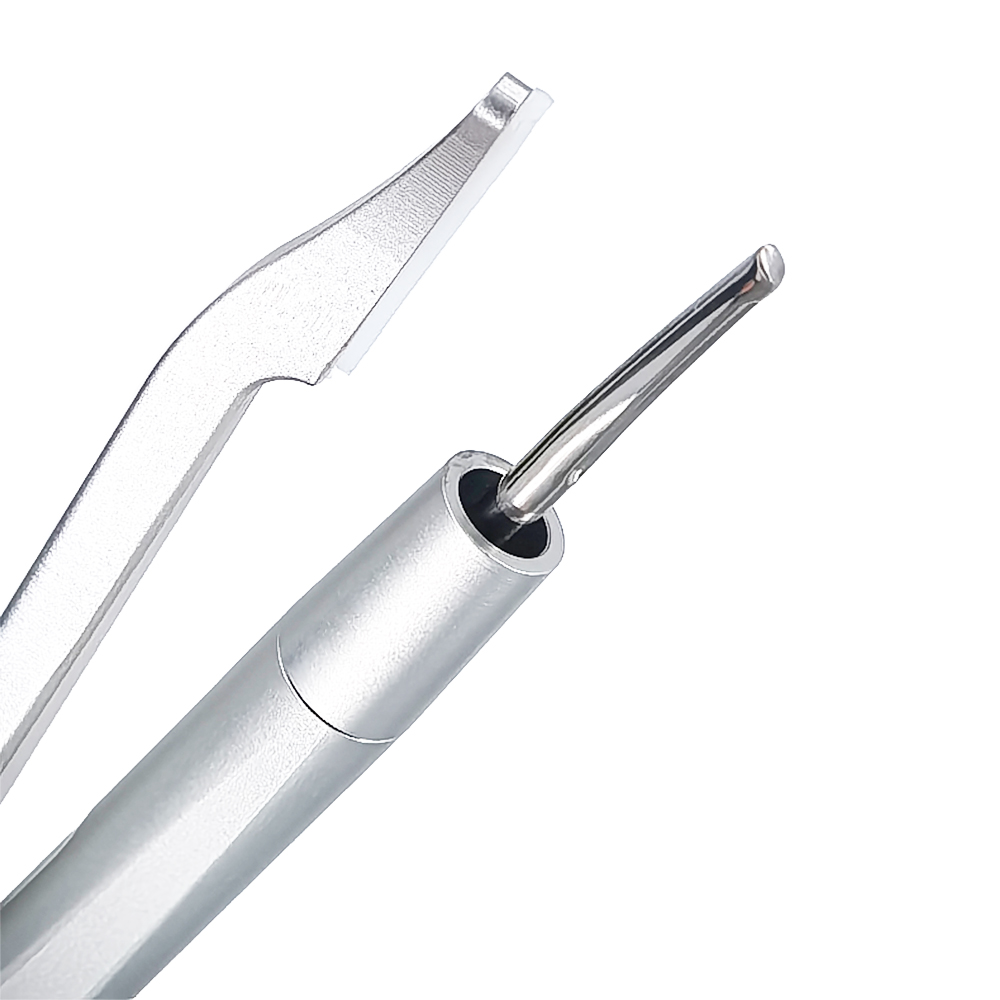
High-value surgical disciplines rely heavily on mechanical energy devices. General surgery frequently utilizes them for complex bowel resections and delicate tissue mobilization. Bariatric operations benefit tremendously from the rapid vessel sealing capabilities. Surgeons use them to efficiently take down the greater curvature of the stomach. Gynecologic surgeons deploy them during complex hysterectomies to divide the broad ligament safely. Head and neck surgeries also present ideal clinical use cases. Thyroidectomies require extreme precision near the recurrent laryngeal nerve. The minimal thermal spread of ultrasonic tools ensures patient safety during these meticulous, high-stakes dissections.
Minimally invasive environments demand highly streamlined instrument handling. You can seamlessly integrate ultrasonic shears into standard laparoscopic workflows. The logistical process follows a highly predictable and safe path. First, the surgical team establishes secure abdominal access. They typically insert an optical trocar 10mm to visualize the entry point clearly. This prevents unintended trauma to the underlying bowel. Once access is completely secure, the surgeon deploys the 5mm shaft of the shears. This slender profile navigates through standard ports effortlessly. It reaches deep abdominal and pelvic cavities for precise, complex dissections.
Efficiency in the operating room saves valuable time and resources. Traditional surgical methods require constant, repetitive instrument exchanges. A surgeon might rapidly switch between a grasper, a dissecting tool, and a bipolar coagulator. Ultrasonic tools completely eliminate this tedious cycle. One single device can safely grasp, dissect, and coagulate tissue simultaneously. This vital consolidation streamlines the entire surgical workflow. It significantly reduces total operative time across various specialties. Shorter surgeries mean less anesthesia exposure for the vulnerable patient. They also improve daily case turnover rates for the healthcare facility.
Best Practice: Always inspect the active blade tip for tissue buildup during prolonged operations. A quick wipe with a sterile, damp sponge maintains optimal cutting speed and prevents tissue sticking.
Procurement teams must analyze hard clinical data before adopting new technology. Vessel sealing capability stands as the absolute top priority. Assess the manufacturer's validated data regarding burst pressure metrics. Review the maximum vessel diameter the device can safely and consistently seal. Most reliable models handle vessels up to 5mm in diameter without issue. Some advanced models utilize intelligent algorithms to claim consistent sealing for 7mm vessels. You should always ask manufacturers to provide independent, peer-reviewed studies verifying these specific burst pressure claims.
Surgeon comfort directly affects patient safety and operative focus. Prolonged operations inevitably cause significant hand fatigue. You must deeply evaluate the overall ergonomics of the selected device. Check the handpiece weight and balance before making a purchasing decision. Examine the trigger design for smooth, reliable activation. Surgeons need clear, responsive tactile feedback when closing the jaws. Furthermore, rotational wheels must allow easy 360-degree shaft manipulation. A well-balanced tool drastically reduces repetitive strain injuries among your critical surgical staff.
Different anatomical procedures require specialized tool shapes. Compare curved blades against traditional straight blades during your evaluation. Curved tips often provide superior visibility in tight, confined anatomical spaces. Straight tips typically excel in aggressive, broad tissue transection. You must consider the availability of multiple shaft lengths.
| Shaft Length | Primary Surgical Application | Clinical Advantage |
|---|---|---|
| 14 cm | Open Surgery (e.g., Thyroidectomy) | Provides maximum tactile control for superficial, highly delicate dissections. |
| 36 cm | Standard Laparoscopy (e.g., Cholecystectomy) | Standard reach for accessing the general abdominal cavity via trocar ports. |
| 45 cm | Bariatric Surgery (e.g., Gastric Bypass) | Extended reach required to navigate deep anatomical planes in larger patients. |
Clinical committees frequently compare mechanical tools against advanced bipolar systems. You need a highly objective feature-to-outcome comparison to guide your procurement strategy.
Sealing Reliability: Bipolar devices historically offer superior burst pressure on larger vessels. They handle massive 7mm vessels with excellent, measurable reliability. Ultrasonic devices excel in different areas entirely. They provide incredibly rapid cutting speeds and precise avascular dissection capabilities.
Thermal Spread: Collateral tissue damage remains a vital clinical concern. Ultrasonic energy consistently demonstrates lower lateral thermal spread. Bipolar systems generate significantly more heat, impacting a much wider margin of surrounding tissue.
Operating Temperatures: The two technologies manage residual heat differently. Ultrasonic blade tips can remain dangerously hot immediately after activation stops. Bipolar jaws utilize tissue impedance technology and tend to cool much more rapidly once power ceases.
Committees must decide whether to stock both technologies or standardize entirely. Guide your ultimate decision based on the facility’s dominant surgical case mix. A hospital focused heavily on bariatric and vascular cases might lean toward bipolar tools. Facilities performing high volumes of thyroid and precise oncologic dissections heavily prefer ultrasonic models. Large academic centers often maintain both technologies. This ensures they equip distinct surgical specialties with the absolute best tools for their specific anatomical challenges.
Adopting new energy devices naturally introduces specific clinical risks. The learning curve focuses primarily on "active blade" spatial awareness. One side of the ultrasonic jaw vibrates at incredibly high speeds. The other side acts merely as a passive tissue pad. Surgeons must undergo rigorous, structured training programs. They need to consciously keep the active, vibrating blade away from non-targeted tissue. Accidental contact can quickly cause severe, unintended thermal injury to adjacent organs. We always strongly recommend simulation sessions before live-patient use.
Mechanical components inevitably wear down over time. The piezoelectric crystals inside the transducer naturally degrade after repeated use. This invisible degradation gradually reduces the vibrational efficiency of the instrument. Hospitals must track the exact number of use-cycles for each reusable handpiece. You must implement a strict, documented preventive maintenance schedule for the generator console. Ignoring this vital maintenance leads to poor tissue cutting and heavily delayed operating times.
Infection control demands strict adherence to documented protocols. You must provide transparent guidelines for your Central Sterile Services Department (CSSD). Reusable handpieces require meticulous, multi-step cleaning protocols. CSSD staff must properly dismantle, enzymatically flush, and sterilize the transducer. Proper handling maintains strict regulatory compliance. It absolutely prevents patient-to-patient cross-contamination.
Common Mistake: Do not submerge the electrical connector cable in enzymatic fluid during pre-cleaning. Moisture intrusion frequently destroys the delicate sensor pins inside the connection plug.
The ultrasonic energy device remains an absolutely indispensable tool in modern surgical suites. It continuously delivers highly precise dissection alongside remarkably low thermal spread. These specific clinical benefits drastically improve complex operative outcomes and protect vital anatomical structures. However, facilities must carefully evaluate performance metrics, device ergonomics, and equipment reliability.
Procurement teams should take immediate, action-oriented steps. Establish clear clinical trial parameters for any new energy device under consideration. Evaluate instrument exchange frequency during live surgical cases. Measure hemostasis success rates accurately across various specialties. Gather structured, objective feedback directly from your surgical staff. Complete these essential steps before committing to a specific manufacturer's generator ecosystem. This diligent process ensures your investment genuinely supports patient safety and operational efficiency.
A: Most standard models are FDA-cleared to seal vessels up to 5mm in diameter. However, certain advanced models utilize specialized algorithms to support sealing vessels up to 7mm safely. You must always verify these capabilities by reviewing the specific manufacturer's published clinical data and regulatory clearances before surgical use.
A: No. Unlike traditional electrosurgery, it relies entirely on high-frequency mechanical vibration. The generator sends electricity to the handpiece, but the transducer converts it into mechanical motion. This mechanism eliminates the risk of stray capacitance, alternate site burns, or electrical interference with patient pacemakers.
A: Transducer lifespan varies significantly by manufacturer. Most reusable handpieces are rated for 50 to 100 sterilization cycles or procedural uses. Over time, the internal piezoelectric crystals degrade, reducing cutting efficiency. Hospitals must track usage closely and replace the component once it reaches its validated cycle limit.
A: Yes. Specialized ultrasonic instruments are engineered specifically for integration with robotic surgical platforms. They utilize the exact same core mechanical friction technology as handheld versions. These robotic tools offer articulated wrists and enhanced precision, allowing surgeons to perform complex, deep-cavity dissections with minimal thermal spread.


