
Phone:
+86-139-5121-3963
Views: 0 Author: Site Editor Publish Time: 2026-07-22 Origin: Site


Head and neck surgical procedures pose profound clinical risks for operating teams. You routinely navigate highly confined anatomical spaces. These tight areas pack critical nerves and fragile vascular networks incredibly close together. Even one millimeter of miscalculation can cause irreversible patient damage. To mitigate these specific risks, modern surgical instrumentation is undergoing a rapid transition. We are shifting away from traditional cold instruments and heavy mechanical forces. Unpredictable electrocautery also falls short in these tight margins. We now rely on advanced, tissue-selective technologies. These modern tools offer unprecedented precision and reliable safety profiles. This article serves as a technical and operational evaluation guide. Surgeons and clinical procurement teams will learn how to effectively integrate an ultrasound scalpel into complex surgical workflows. You will discover its underlying mechanisms, core clinical applications, and essential adoption criteria to elevate patient care.
Tissue Selectivity: The ultrasound scalpel cuts mineralized bone while preserving adjacent soft tissue, critical nerves, and blood vessels.
Reduced Thermal Spread: Offers a significantly lower risk of thermal injury compared to traditional surgical energy devices, vital for H&N procedures.
Optimized Outcomes: Clinical consensus points to reduced blood loss, minimized postoperative edema, and shorter operative times in complex resections.
Strategic Adoption: Successful implementation requires evaluating the ultrasonic scalpel system's ergonomics, specific handpiece configurations, and the surgical team's learning curve.
Head and neck anatomy presents extreme clinical complexity. Surgeons operate in incredibly confined surgical fields. You constantly work adjacent to essential structures. The facial nerve, the recurrent laryngeal nerve, and the carotid artery often lie mere millimeters from your target tissue. A minor slip here carries devastating consequences.
Traditional bone-cutting tools introduce significant baseline risks in these environments. Rotary drills, bone saws, and rongeurs rely entirely on mechanical force. They generate high rotational torque. This mechanical action can easily grab surrounding elastic tissues. When a drill bit catches a delicate nerve fiber, it causes immediate mechanical trauma. Furthermore, traditional tools create excessive bone dust. This debris rapidly obstructs your visual field.
Legacy hemostatic tools also present severe drawbacks. Standard monopolar and bipolar cautery systems manage bleeding effectively. However, they generate unpredictable thermal spread. High heat transfers quickly through surrounding fluids and tissues. This lateral thermal damage frequently injures adjacent nerves. It compromises the very structures you aim to protect.
Operating in these high-stakes zones establishes a clear clinical necessity. You need a modern surgical energy device prioritizing tissue differentiation over brute mechanical force. Surgeons require tools distinguishing between rigid bone and soft elastic structures. Achieving precision demands technology respecting the delicate margins of head and neck anatomy.
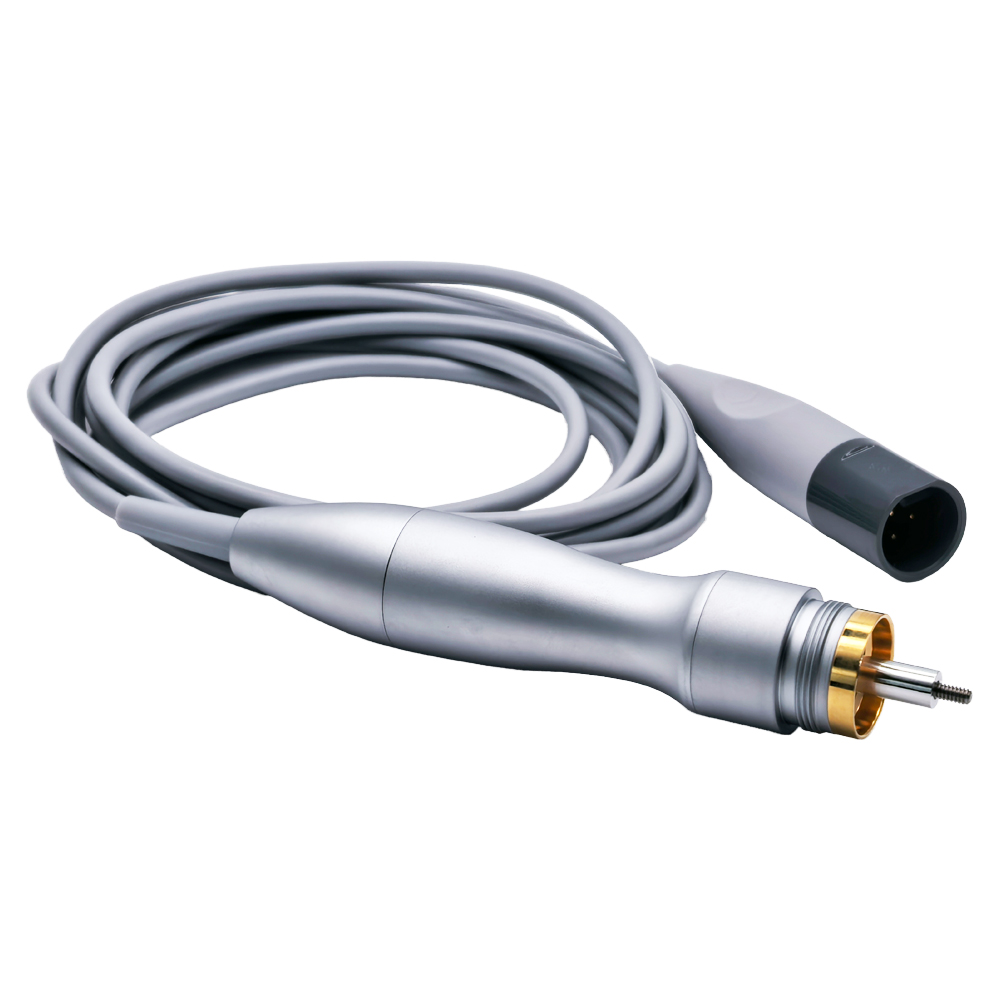
Modern surgical instrumentation relies heavily on piezoelectric technology. The core system converts standard electrical energy into high-frequency mechanical vibration. These vibrations typically range between 20 and 30 kHz. Unlike rotary drills spinning in a full circle, ultrasonic tools oscillate rapidly in a linear, back-and-forth motion. This tiny, rapid movement defines their clinical advantage.
The primary mechanism driving tissue selectivity is the cavitation effect. When the vibrating tip contacts rigid structures like mineralized bone, it transfers energy directly. The ultrasonic frequencies rapidly vaporize cellular fluids within the bone matrix. This causes the rigid bone structure to fragment and cut cleanly. Conversely, soft tissues react differently. Nerves, dura mater, and blood vessels possess high elasticity. They absorb the high-frequency vibration. They simply stretch and move out of the way without suffering structural failure.
Friction naturally generates heat during high-speed oscillation. Effective thermal management prevents collateral tissue damage. To mitigate heat buildup, an ultrasonic handpiece incorporates sophisticated integrated irrigation mechanisms. The console pumps sterile saline directly down the shaft. This continuous fluid flow serves two critical purposes.
Cooling: The fluid constantly cools the titanium cutting tip. It prevents localized temperatures from exceeding safe physiological limits.
Clearing: The liquid quickly flushes away microscopic bone debris. It maintains a perfectly clear surgical field for improved visibility.
Understanding these mechanisms helps clinical teams maximize safety. The technology physically separates cutting power from mechanical tearing, transforming how we approach complex dissections.
Ultrasonic tools provide distinct advantages across various head and neck sub-specialties. They enable surgical teams to perform highly intricate procedures safely.
Maxillofacial & Orthognathic Surgery: Surgeons perform precise osteotomies to reconstruct facial structures. You must cut jaw bone without severing the inferior alveolar nerve. Ultrasonic tools execute ultra-thin, precise bone cuts. They minimize mechanical trauma to this vital nerve block. Patients experience less postoperative numbness and localized pain.
Otology & Neurotology: Mastoidectomies and lateral skull base surgeries demand millimeter-level precision. You operate dangerously close to the dura and the facial nerve. The linear oscillation prevents the tool from "walking" or skipping across the bone surface. This stability allows you to shave bone safely down to a paper-thin margin over the dura.
Rhinology & Endoscopic Skull Base: Navigating the sphenoid sinus and cribriform plate requires specialized access. Standard drills block the endoscopic view. Long, angled ultrasonic designs provide clear line-of-sight access. They allow surgeons to remove rigid septal spurs or skull base bone safely under purely endoscopic visualization.
Thyroid & Parathyroid Resections: Soft tissue management here is equally critical. Surgeons utilize specialized ultrasonic shears for concurrent vessel sealing and tissue dissection. The technology effectively coagulates bleeding vessels while strictly controlling thermal spread. This precise control actively mitigates recurrent laryngeal nerve palsy during complex thyroidectomies.
These diverse applications highlight a common theme. By minimizing mechanical force and controlling thermal energy, surgeons execute delicate resections faster and safer.
Clinical procurement teams demand robust evidence before adopting new technologies. General clinical consensus and peer-reviewed safety data reveal significant advantages over conventional modalities.
First, consider blood loss and anatomical visualization. The cutting action produces a localized hemostatic effect on cancellous bone. The frictional heat and cavitation gently seal small intraosseous bleeding channels. This maintains a exceptionally bloodless surgical field. Improved visibility reduces surgeon fatigue and accelerates procedural progress.
Nerve and soft tissue preservation stands as the most critical outcome metric. Aggregate safety data trends show reduced incidences of transient or permanent nerve damage compared to rotary drills. Because the tip does not spin, it cannot grab a stray nerve fiber and wrap it around a shaft. The elasticity of the nerve protects it from the linear vibration. While you must still exercise caution, the physiological margin of safety expands considerably.
Postoperative healing also improves. Traditional drills generate high heat, frequently causing localized osteonecrosis (bone death). This delays bone healing. Ultrasonic tools operate at much lower temperatures due to integrated irrigation. Patients show reduced postoperative inflammatory responses. Less tissue trauma translates directly into faster recovery metrics and shorter hospital stays.
Clinical Outcomes Comparison
| Clinical Parameter | Rotary Drills & Saws | Ultrasonic Surgical Devices |
|---|---|---|
| Tissue Selectivity | Low (cuts both bone and soft tissue blindly) | High (cuts bone, preserves elastic tissues) |
| Mechanical Trauma | High risk of grabbing and tearing | Minimal (linear oscillation only) |
| Thermal Spread | Variable (requires external cooling) | Strictly controlled via integrated irrigation |
| Field Visibility | Often obscured by bleeding and bone dust | Clear (hemostatic effect and fluid flushing) |
| Postoperative Edema | Typically moderate to high | Significantly reduced |
Adopting new surgical technology requires managing human factors. Surgical teams face a distinct learning curve during initial implementation.
The most significant hurdle involves tactile feedback differences. Surgeons spend years mastering the high-pressure push required by rotary drills. Moving to an ultrasonic device demands a psychological and physical shift. You must apply remarkably low pressure. If you push too hard, you dampen the piezoelectric vibration. The tool stops cutting efficiently. You must let the microscopic vibrations do the work.
Acoustic and vibration factors also require adjustment. The console generates a unique, high-pitched operational sound. The handpiece provides a different vibratory feel through the surgeon's gloves. These sensory changes initially disorient experienced surgeons.
To overcome these challenges, clinical teams should implement specific operational best practices:
Adopt a "Painting" Technique: Use light, brushing strokes rather than forceful, downward pushing.
Monitor Irrigation Flow: Ensure the cooling fluid lines remain unkinked and flowing freely to prevent thermal build-up.
Supervised Practice: Complete a dedicated dry-lab session before utilizing the tool in live operations.
Workflow integration affects the broader operating room team. Nurses must learn new setup procedures. The generator console requires specific calibration. Irrigation lines must connect precisely to the handpiece. Additionally, sterile processing departments must master new, complex handpiece sterilization protocols to ensure equipment longevity and patient safety.
Clinical procurement involves more than simply buying a single tool. You must evaluate the entire platform. Selecting the right ultrasonic scalpel system requires balancing clinical versatility against financial realities.
Modularity stands as the primary evaluation criterion. Head and neck surgery encompasses diverse anatomical challenges. You need a system supporting broad handpiece variety. Evaluate the availability of specialized tips. Serrated blades work well for aggressive bone resection. Spatulated tips help lift and protect dura. Curved shafts provide essential access for endoscopic sinus procedures. A versatile console powers multiple configurations, maximizing utility across different sub-specialties.
Financial evaluation requires reframing standard cost paradigms. You must balance the upfront capital expenditure of the generator against ongoing consumable costs. Single-use titanium tips represent a recurring expense. However, you must weigh these costs against tangible operational savings. A highly efficient energy system reduces total operating room time. It lowers the complication rates associated with nerve damage and excessive bleeding. Fewer complications mean shorter patient stays and reduced liability exposure.
Finally, prioritize vendor support and clinical training. Technology adoption fails without proper guidance. Ensure your vendor provides comprehensive on-site training for both surgeons and scrub nurses. Demand access to dry-lab practice materials. Responsive, local technical support proves critical during the initial adoption curve. The right vendor acts as an implementation partner, not just an equipment supplier.
The transition to advanced surgical instrumentation represents a critical leap in patient care. The ultrasound scalpel definitively moves bone dissection away from a dangerous, mechanical force paradigm. We now operate within a precision-energy paradigm. This shift protects vital nerves, minimizes collateral tissue damage, and accelerates patient healing.
We assess this technology as a mandatory standard-of-care evolution for high-stakes head and neck environments. The anatomical complexities leave zero margin for error. While surgeons must respect the initial learning curve, the resulting clinical safety margins justify the operational shift. You cannot achieve modern surgical goals using outdated mechanical tools.
We strongly encourage clinical leadership to take the next step. Request a comprehensive clinical demonstration for your surgical staff. Review specific, peer-reviewed outcome data regarding nerve preservation and operative times. Consult with specialized product experts to conduct a thorough workflow assessment for your operating rooms.
A: A standard drill uses high-speed rotational mechanics. It forcefully tears through bone and frequently grabs adjacent soft tissues, creating significant bone dust. An ultrasound scalpel uses linear, high-frequency vibration. It selectively vaporizes rigid bone while harmlessly vibrating against elastic tissues like nerves and vessels, eliminating rotational tearing and minimizing debris.
A: Yes, it offers a vastly superior safety margin compared to traditional tools. Its tissue-selective nature prevents the blade from mechanically tearing the elastic nerve fiber. However, surgeons must still employ meticulous technique. Proper irrigation remains mandatory to prevent localized thermal damage to the nerve during proximity dissection.
A: Most surgeons transition from initial hesitation to operational proficiency within five to ten supervised cases. The primary challenge involves unlearning the urge to push forcefully. Once a surgeon masters the light-touch "painting" stroke and adjusts to the unique acoustic feedback, cutting efficiency and confidence rapidly increase.
A: Yes, modern platforms prioritize modularity. A single advanced generator console typically powers various specialized handpieces. It can drive aggressive bone-cutting scalpels for osteotomies and seamlessly switch to soft-tissue sealing shears for vessel coagulation. This cross-specialty versatility maximizes the capital investment for the hospital.


