
Phone:
+86-139-5121-3963
Views: 0 Author: Site Editor Publish Time: 2026-06-15 Origin: Site


When someone asks, "how do I reload my stapler?", they might picture a jammed piece of office equipment. However, in a surgical context, the stakes are profoundly different. Proper loading of a linear cutter stapler reload is a critical matter of clinical efficacy and patient safety. These specialized cartridges play an indispensable role in gastrointestinal, thoracic, and pediatric surgeries. Surgeons rely on them to create secure tissue transections and precise anastomoses.
A single misstep during the loading phase can lead to severe intraoperative complications. This guide provides operating room staff and procurement managers with a clear, actionable framework. You will learn how to select, evaluate, and correctly insert these essential surgical components. We aim to help you achieve zero-defect tissue transection and seamless workflow integration during every procedure.
Compatibility is absolute: Reloads must strictly align with the specific instrument handle model and length (e.g., 60mm, 80mm, 100mm) to prevent intraoperative failures.
Color-coding dictates clinical application: Selecting the correct reload color (White, Blue, Gold, Green, Black) based on tissue thickness is non-negotiable for secure B-form staple lines.
Safety mechanisms matter: Modern reloads feature empty-cartridge lockouts; evaluating these features prevents the catastrophic risk of firing without staples.
Procurement requires balance: Choosing between OEM and compliant third-party reloads requires a strict evaluation of cost-efficiency versus documented clinical reliability and regulatory compliance.
Surgical teams face immense pressure to deliver flawless patient outcomes. The cost of staple line failure far outweighs the upfront price of the cartridge. Leaks and bleeding require immediate, complex interventions. Prolonged operative times drain hospital resources and endanger patients. Therefore, your primary clinical goal remains simple but demanding. You must achieve consistent hemostasis and pneumostasis every time you fire the device.
You cannot achieve these outcomes without absolute device compatibility. You must rigorously verify device alignment before beginning any procedure. A cartridge length must perfectly match the corresponding linear cutter instrument. If you load a 60mm cartridge into an 80mm handle, the mechanism will fail. You risk jamming the instrument, misfiring staples, or shredding delicate tissue.
Avoid the dangerous temptation to force mismatched components together. Trying to fit a Covidien cartridge into an Ethicon handle invites disaster. Cross-brand mixing is unacceptable unless the manufacturer explicitly designed the components for cross-compatibility. Always consult the regulatory documentation to confirm safe integration.
How do we define a successful loading process? Success requires seamless integration into the existing surgical workflow. The scrub nurse should execute the reload swiftly and confidently. You must experience zero misfires during deployment. Finally, the surgeon must observe verifiable, uniform tissue compression across the entire staple line. Only then can you confirm a secure anastomosis.
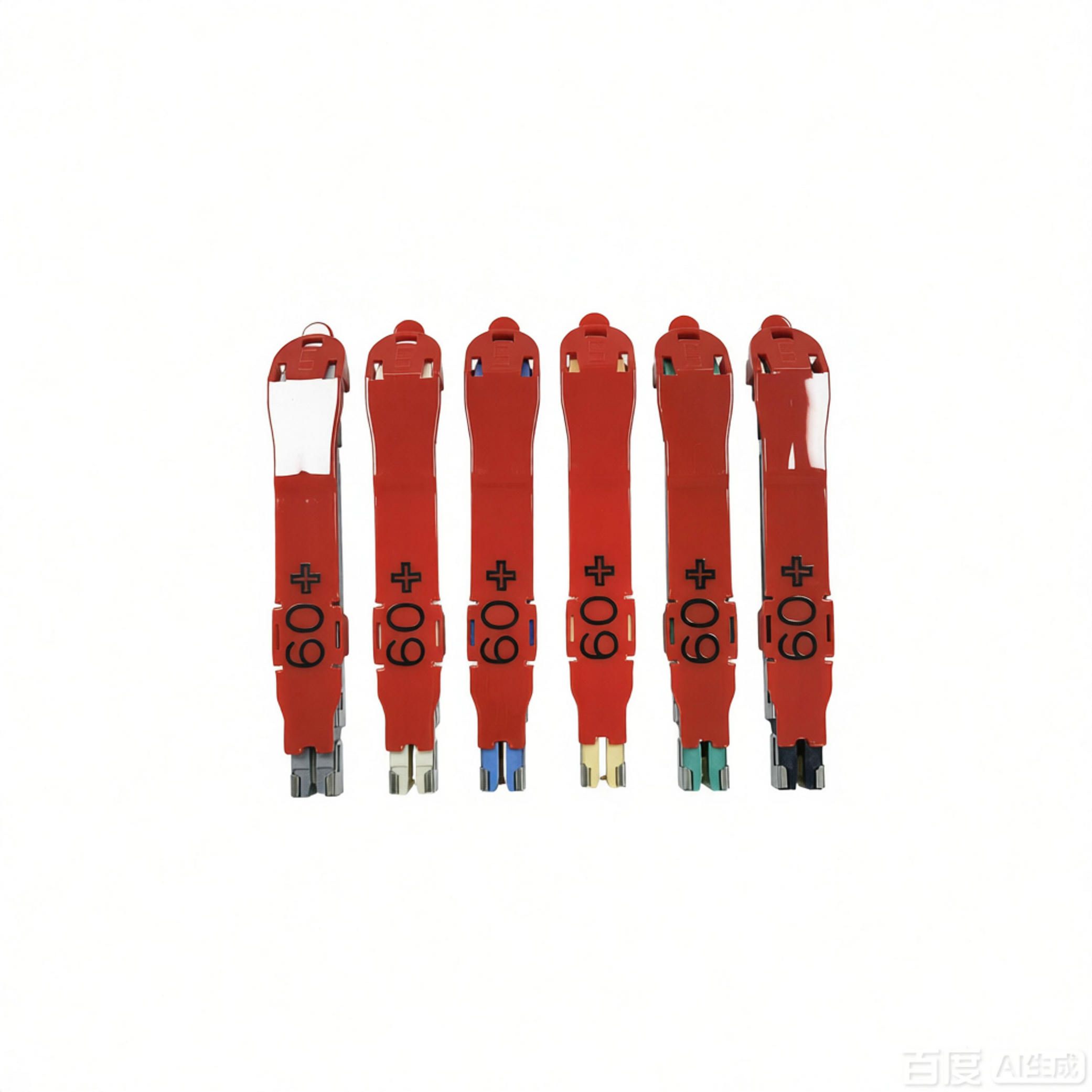
Matching staple height to the target tissue represents your most critical decision stage. This evaluation directly links product features to patient outcomes. If staples are too short, they will crush thick tissue. This causes ischemia, necrosis, and eventual leakage. If staples are too tall for thin tissue, they will not close tightly. This poor closure leads to immediate bleeding. You must understand how to navigate the universal color matrix to prevent these errors.
Industry standards rely on a color-coded system to indicate staple height. We have detailed the primary clinical applications for each color below.
| Color Code | Tissue Type | Open Staple Height | Clinical Application |
|---|---|---|---|
| White | Vascular / Thin Tissue | Approx. 2.5mm | Ideal for delicate vascular structures and pediatric applications. |
| Blue | Standard Tissue | Approx. 3.5mm | Standard choice for routine gastrointestinal tracts. |
| Gold / Green | Thick Tissue | Approx. 3.8mm - 4.8mm | Required for the distal stomach or thickened bowel. |
| Black | Extra Thick Tissue | Maximum height (varies) | Reserved for highly compromised or fibrotic tissue. |
While this universal color matrix provides a solid baseline, you must apply a skeptical lens. Never rely on color alone. Always verify the actual closed-staple heights across different manufacturers. Proprietary designs often alter tissue compression dynamics significantly. For example, some brands utilize stepped staple heights. These cartridges deploy shorter staples near the cut line for tighter hemostasis. They simultaneously deploy taller staples on the outer rows to preserve blood supply. You must understand these nuanced mechanics before bringing a new brand into the operating room.
A standardized operational procedure (SOP) protects patients from preventable human errors. Scrub nurses and surgeons must follow a strict protocol every time they handle the instrument. Bypassing these steps compromises the firing mechanism and endangers the patient. Follow this implementation guide to ensure clinical realities match safety expectations.
Preparation begins before the instrument ever touches the sterile field. You must execute these initial checks flawlessly:
Inspect the sterile packaging: Check for any tears, moisture, or breaches in the sterile barrier. Discard compromised packages immediately.
Verify details: Confirm the expiration date. Double-check the color code and length against the surgeon's specific request.
Ensure open jaws: Before attempting insertion, verify the instrument jaws are fully open. A partially closed handle will block the track.
Once you complete preparation, move directly to the insertion process. Precision matters deeply here. Slide the new cartridge into the channel at the manufacturer's specified angle. You must listen closely. Push the cartridge until it audibly "clicks" into place. This click serves as your primary auditory confirmation of secure seating. Next, visually verify the alignment. Ensure the retaining pin or tissue-gap control mechanism sits perfectly in its track.
Removing the shipping wedge requires careful timing. You must remove this plastic protector only after securely seating the cartridge. Pulling the wedge too early exposes the staples. This premature exposure can dislodge staples and ruin the entire cartridge. Wait for the audible click, confirm alignment, and then pull the wedge smoothly away.
Risk mitigation requires acute tactile awareness. If you feel sudden resistance during loading, stop immediately. Do not force the cartridge into the handle. Forcing components often bends internal pushers or damages the knife blade track. Discard the stubborn cartridge and open a new one. Wasting a single cartridge is vastly preferable to compromising an anastomosis.
Procurement teams constantly navigate complex solution categories. Choosing between Original Equipment Manufacturer (OEM) products and specialized third-party compatible options requires deep analysis. You must weigh scalability against clinical reliability. High-volume operating rooms process thousands of procedures annually. In these environments, third-party alternatives often offer significant financial advantages. However, these alternatives demand rigorous vetting before approval.
You cannot sacrifice patient safety for budget reductions. Procurement managers must implement a strict security and compliance checklist. Use the following criteria to evaluate alternative vendors:
Regulatory Clearances: Demand proof of FDA 510(k) clearance or a valid CE mark. These documents prove the device meets established safety standards.
Contract Constraints: Review existing hospital purchasing contracts carefully. Check your current OEM warranty clauses. Ask directly: does using a third-party cartridge void the warranty on our expensive handles?
Clinical Evidence: Do not accept marketing claims blindly. Request recent clinical trial data. Ask for extensive post-market surveillance reports. Vendors must prove their product achieves equivalent B-shape staple formation.
Manufacturing Tolerances: Request engineering reports comparing cartridge track dimensions. Third-party options must mirror OEM tolerances to prevent intraoperative jamming.
Balancing these factors ensures optimal inventory management. You must align financial strategy with surgical safety protocols. Bring clinical leaders into the procurement discussion early. Surgeons will readily adopt compliant alternatives if they review solid data proving equivalence.
What separates a premium cartridge from a standard alternative? The answer usually lies in built-in safety mechanisms. These hidden features actively protect patients from catastrophic surgical errors. When evaluating different brands, you must closely examine these specific evaluation dimensions.
The empty cartridge lockout serves as the most critical safety feature. Operating rooms move quickly. In the rush of a procedure, a scrub nurse might accidentally hand back a fired instrument. A premium reload physically prevents the stapler jaws from clamping or firing if it detects an empty cartridge. It also blocks insertion if a previously fired cartridge remains in the chamber. This lockout entirely eliminates the risk of slicing tissue without deploying securing staples.
Tissue gap control represents another vital evaluation metric. You must assess how the cartridge interacts with the handle during closure. The jaws must maintain strictly parallel closure from the proximal end to the distal tip. Inferior products often splay open at the tip under pressure. This splaying allows thick tissue to slip out, resulting in uneven staple lines and immediate bleeding. Premium gap control mechanisms lock the distal tip securely before the blade advances.
Apply a strict shortlisting logic during vendor selection. Prioritize manufacturers who openly share transparent failure-rate data. Look for partners who prioritize education alongside their products. The best vendors offer comprehensive, hands-on, in-service training for your entire surgical staff. Superior safety mechanisms only work when your team understands how to use them correctly.
Proper selection and loading of a surgical cartridge is a critical joint responsibility. Clinical staff and procurement teams must work together to prioritize patient safety. Every loading step, from color selection to verifying the audible click, directly influences surgical outcomes. You cannot treat these precision instruments like simple office supplies.
We recommend immediate, action-oriented next steps to strengthen your protocols. Clinical staff should standardize a mandatory reload verification checklist for the sterile field. This ensures no step gets skipped during high-stress procedures. Procurement teams should initiate a clinical value analysis (CVA) of current vendors. Base this analysis strictly on tissue compression data, proven safety lockouts, and regulatory compliance. Collaboration across these departments guarantees zero-defect anastomoses and seamless operating room efficiency.
A: Generally no. You should never mix brands unless the third-party manufacturer explicitly provides regulatory clearance. They must produce documents like an FDA 510(k) proving exact cross-compatibility with your specific OEM handle. Mixing unverified components causes jams and severe tissue damage.
A: The instrument may jam completely or fail to fire. Worse, it might deploy staples unevenly while cutting tissue, leading to an insecure anastomosis and severe bleeding. You must always listen carefully for the audible click during insertion.
A: Most disposable surgical handles handle a maximum number of firings per procedure. This typically ranges from 6 to 8 times before the internal knife blade dulls. You must always consult the specific manufacturer's Instructions for Use (IFU).


