
Phone:
+86-139-5121-3963
Views: 0 Author: Site Editor Publish Time: 2026-06-21 Origin: Site


Surgical stapling plays a critical role in modern medical procedures. This is especially true within complex gastrointestinal and thoracic surgeries. In these high-stakes environments, absolute precision directly dictates the speed of patient recovery. Clinical teams increasingly recognize the massive advantages of utilizing reloadable linear cutter staplers over fully disposable units. This strategic shift reduces clinical waste while maintaining top-tier mechanical performance. However, securing these positive outcomes demands strict adherence to operational protocols. Our objective is straightforward. We provide an evidence-based, step-by-step framework for selecting, operating, and troubleshooting your surgical devices. You will learn how to eliminate dangerous misfires, ensure robust anastomotic integrity, and confidently guide your procurement evaluation. By mastering these specific techniques, surgical teams can flawlessly deploy a linear cutter stapler reload during every single procedure.
Selecting the correct reload cartridge based on tissue thickness (color-coded systems) is the foundational step for preventing leaks and necrosis.
Tactile and auditory feedback (the "click") during insertion guarantees the reload is properly seated and the safety lockout is deactivated.
Never attempt to re-sterilize a single-use reload cartridge; cross-contamination and mechanical deformation present severe compliance and patient safety risks.
Standardized procurement should weigh cartridge compatibility, staple formation reliability, and the presence of tissue-retaining safety mechanisms.
Anastomotic leaks represent a nightmare scenario for any surgical team. Improper loading directly compromises the entire operation. Selecting the wrong cartridge often leads to immediate staple line failure. This failure triggers internal hemorrhage and dangerous sepsis. Patients then require costly and highly dangerous revision surgeries. These complications drastically extend hospital stays and increase mortality rates. We must recognize that tissue thickness dictates staple size. If you select a cartridge too small for thick tissue, severe necrosis occurs. The staples crush the micro-vessels. Conversely, if you choose a cartridge too large, the tissue bleeds. The staples fail to compress the layers tightly enough.
Hospitals must balance operational budgets against acute surgical risks. Reloadable staplers definitely lower the base cost-per-procedure. They allow you to retain the expensive handle while swapping only the cartridge. But this benefit only materializes if surgical teams avoid unnecessary cartridge waste. Standardized usage protocols prevent mechanical jams and secure these clinical savings. You cannot afford procedural delays caused by user error in the operating room. Every wasted cartridge nullifies the financial benefit of the reloadable system. Proper training ensures teams maximize value without compromising patient safety.
The lockout mechanism serves as a critical guardian in the operating room. Manufacturers design this built-in safety feature to prevent absolute disaster. It physically stops the firing of an empty or previously fired cartridge. Imagine clamping down on delicate bowel tissue with an empty device. The blade would slice the tissue without deploying any securing staples. Modern surgical facilities consider this lockout feature a strict, non-negotiable requirement. It reliably protects both the vulnerable patient and the stressed surgical team. You must never attempt to bypass this mechanism during a procedure.
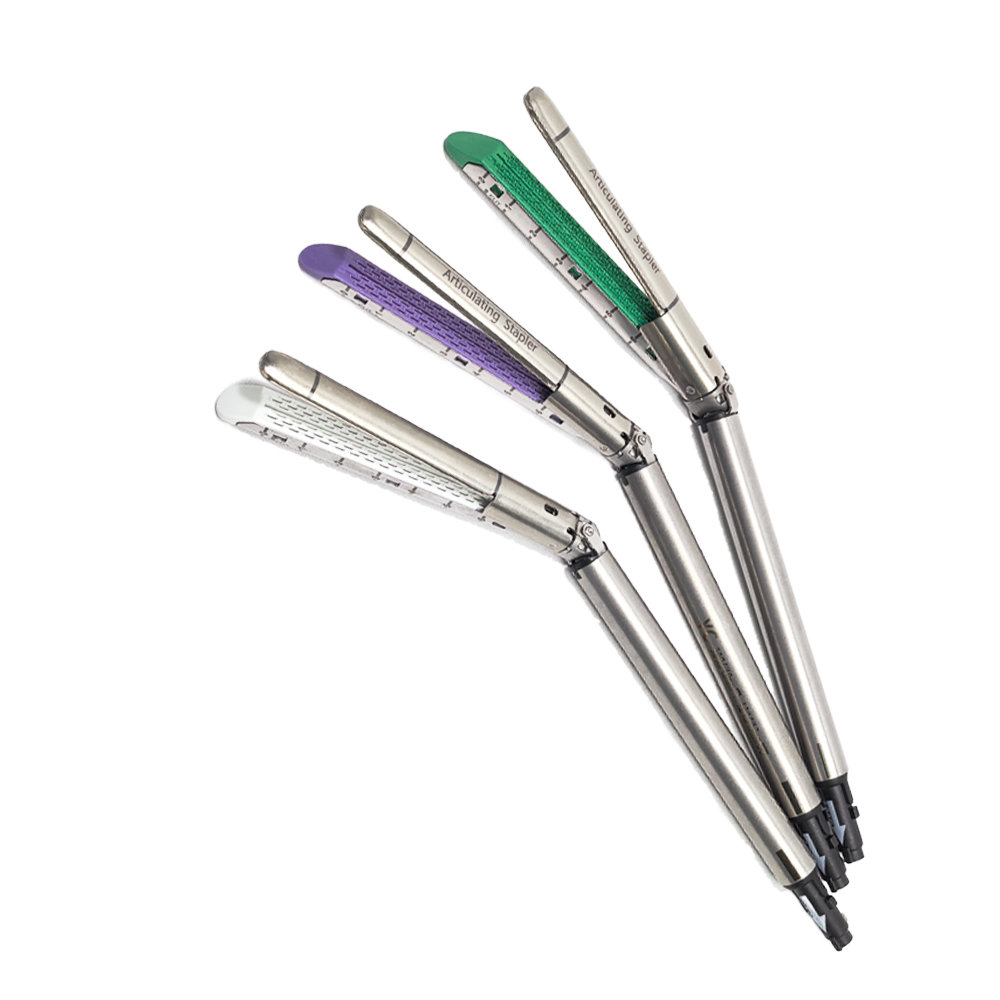
Surgeons rely heavily on standard color-coding systems for quick visual identification. You must accurately match the cartridge to the specific tissue type. We recommend always verifying specific manufacturer guidelines during your procurement phase. However, the medical industry generally follows a highly consistent mapping structure.
| Cartridge Color Code | Designed Tissue Application | Common Surgical Examples |
|---|---|---|
| White / Grey | Vascular and ultra-thin tissue | Pulmonary vessels, delicate mesentery |
| Blue | Standard normal tissue | Routine bowel resections, general GI |
| Gold / Green | Thick, challenging tissue | Distal stomach, thickened bowel |
| Black | Extra-thick or fibrotic tissue | Chronic fibrotic tissue, specific bariatrics |
You must visually confirm the color before passing the device to the surgeon. This simple check prevents catastrophic tissue damage.
Evaluating any reload requires understanding the mechanics of open versus closed staple height. You must know exactly how tissue compression works at a microscopic level. The staple pushes through the tissue and hits the anvil. It then bends into a classic "B" shape upon complete firing. This specific shape is not accidental. It allows vital micro-circulation to continue flowing through the tissue margin. It simultaneously secures the tissue tightly enough to prevent fluid leaks. If the closed height is too tight, it strangles the tissue. If it is too loose, it fails to seal the cut line.
We must strongly warn against the extreme risk of cross-brand assumptions. Mixing proprietary stapler handles with third-party or off-brand reloads introduces massive danger. Minute dimensional misalignments can cause catastrophic mechanical failure during a live procedure. You should only mix components if explicit FDA or CE compliance documentation verifies it. A generic linear cutter stapler reload might fit into the handle perfectly. However, the firing track might misalign by a fraction of a millimeter. Do not risk patient safety just to save minor upfront equipment costs.
Executing a flawless reload sequence demands strict attention to detail. Let us break down the exact implementation phases. You must start with a thorough pre-loading inspection.
Visually inspect the sterile external packaging for any tears, moisture, or damage.
Remove the device carefully using strict, standardized aseptic technique.
Verify the presence and structural integrity of the tissue retaining pin.
Examine the exposed staple line to ensure absolutely no staples are missing.
You must align the reloading unit precisely with the lower jaw of the stapler. Slide the cartridge smoothly into the primary device channel. You will feel immediate tactile resistance as it enters the track. Push firmly until you hear a distinct, loud auditory "click." This specific sound confirms proper seating and deactivates the safety lockout.
Risk Check: Do not ever force the cartridge into the channel.
If you encounter heavy resistance, immediately withdraw the unit.
Misalignment will permanently damage the delicate internal firing track.
Proper firing technique is just as crucial as precise loading. You must apply smooth, continuous pressure on the main firing handle. This steady, unbroken motion ensures perfectly uniform staple formation. It also guarantees a clean, sharp blade transection through the clamped tissue. Never start and stop your grip mid-fire. Jerky, segmented movements severely compromise the structural integrity of the staple line. They often result in jagged cuts and malformed titanium staples.
You must complete the sequence safely to prepare for the next step. Retract the internal blade fully before attempting to open the jaws. Disengage the cartridge release button or lever slowly and carefully. Remove the spent cartridge from the reusable titanium handle. Safely dispose of the used unit immediately in a designated biohazard container. Do not leave empty cartridges lying on the sterile field.
Even with perfect preparation, unexpected realities emerge in the operating room. Device jamming mid-fire constitutes a critical surgical emergency. If the internal blade jams, you must immediately follow your established emergency protocols. Never forcefully yank the locked device away from the clamped tissue. Doing so will tear the organs and cause massive bleeding. Premium reloads feature advanced anti-slip designs and robust tissue retention pins. These specialized elements drastically reduce the likelihood of a mid-fire jam. You should heavily prioritize these exact features during procurement evaluations.
Incomplete staple formation presents another extremely serious clinical risk. Several potential causes routinely trigger this dangerous outcome. Selecting a cartridge that is too small for thick tissue causes excessive compression. The titanium staples simply cannot form properly under such immense physical stress. Furthermore, firing over existing staple lines or hard surgical clips ruins formation. The blade hits the metal, dulls instantly, and deforms the new staples. Always clear the jaw path entirely before squeezing the firing handle.
Sometimes the device handle simply refuses to squeeze or fire. This usually means the internal safety lockout activated successfully. It prevents disaster by detecting an empty or previously fired cartridge. You must understand that a lockout is a successfully deployed safety feature. It is absolutely not a device malfunction. To safely reset the surgical procedure, open the jaws and remove the blocked unit. Replace it immediately with a fresh, sterile linear cutter stapler reload.
Surgical teams often inquire about sterilizing and reusing single-use components. The dangerous "re-sterilization myth" still persists in many facilities globally. We must provide a firm, evidence-backed warning against this hazardous practice. Re-sterilizing a single-use reload permanently compromises the internal blade sharpness. It also alters the delicate staple integrity and introduces severe cross-contamination risks. The heat and chemicals cause microscopic mechanical deformation within the plastic housing. This deformation alone makes the cartridge wildly unpredictable and unsafe for reuse. You must treat single-use cartridges as strictly single-use.
We must clearly differentiate the reload from the reusable instrument body. The single-use reload requires immediate disposal after a single firing. The reusable stapler handle, however, goes directly to the sterile processing department. Facilities must use fully validated hospital sterilization protocols for the main device body. Common approved methods include rigorous enzymatic cleaning followed by strict autoclaving procedures. You must track the handle's lifecycle to ensure the internal springs remain strong.
Procurement teams play a major role in ensuring facility-wide regulatory alignment. You should only shortlist vendors who provide clear, comprehensive Instructions for Use (IFUs). These critical documents must align perfectly with local health authority standards. Look for explicit FDA, CE, or MDR certifications before finalizing any purchase agreements. Strict compliance protects the hospital from massive legal and clinical liabilities. It ensures that every device meets the highest possible threshold for patient safety.
Sourcing the right surgical equipment requires a highly structured, clinical approach. You must prioritize actual surgeon feedback above simple marketing brochures. Set up a comprehensive pilot evaluation directly in the operating room. Surgeons need to test tactile feedback and general reload ease firsthand. They must verify staple line integrity on varying tissue types during live or simulated cases. A device that looks good on paper might feel clunky in a surgeon's hands.
You must rigorously evaluate the vendor's complete inventory matrix and supply chain. They should offer a full range of device lengths. Standard sizes usually include 60mm, 80mm, and 100mm options. Furthermore, adequate tissue-thickness color availability prevents serious operational bottlenecks. If a vendor frequently runs out of green cartridges, you cannot perform gastric bypasses safely. Supply chain stability is just as vital as the product design itself.
You must look far beyond the basic unit price of the reload. A cheap cartridge that misfires costs the hospital exponentially more in the end. Factor in the documented reduction of procedural misfires when evaluating proposals. Evaluate the availability of robust, peer-reviewed clinical data supporting their products. You should heavily value the vendor's direct commitment to ongoing OR staff training. Vendors who provide in-service education significantly reduce the rate of user errors.
| Evaluation Metric | What to Look For | Why It Matters |
|---|---|---|
| Portfolio Depth | Full range of colors (White to Black) and lengths (60-100mm). | Ensures you have the right tool for diverse anatomical needs. |
| Safety Features | Audible click seating, tissue retaining pins, reliable lockouts. | Prevents catastrophic misfires and fatal tissue slippage. |
| Vendor Support | On-site training, clear IFUs, responsive clinical reps. | Minimizes user error and streamlines the surgical workflow. |
Mastering the use of a linear cutter stapler reload is absolutely essential. It bridges the critical gap between brilliant surgical device engineering and positive patient outcomes. Accurate tissue measurement prevents dangerous leaks and devastating internal bleeding. Strict adherence to proper loading mechanics eliminates costly procedural delays. Furthermore, stringent vendor evaluation directly mitigates long-term surgical risks.
We encourage clinical directors and procurement teams to take immediate action today. Review your current stapling inventory to identify any glaring clinical gaps. Request updated, compliant product IFUs from your existing suppliers. Consider scheduling a hands-on vendor demonstration for a side-by-side product evaluation. These practical, decisive steps ensure your surgical teams remain fully equipped and rigorously prepared.
A: You must consult the manufacturer's specific guidelines. Typically, you can reload a reusable instrument handle 7 to 8 times during a single procedure. However, you must utilize a brand-new, sterile cartridge for every individual firing. Never reuse a single cartridge under any circumstances.
A: The safety lockout triggers automatically to protect the patient. It engages when the device detects an empty cartridge, an improperly loaded unit, or a previously fired cartridge. This specifically prevents the surgeon from accidentally cutting tissue without deploying new staples.
A: Generally, no. You should never mix brands unless specific cross-compatibility is formally certified by regulatory bodies. Minute misalignments between a handle and a third-party reload cause catastrophic misfires. Always prioritize FDA or CE-approved combinations to maintain compliance and patient safety.
A: Always ensure the tissue retaining pin is properly engaged before firing. Modern premium reloads feature advanced anti-slip tissue grip technology. Selecting high-quality cartridges and clamping the tissue smoothly prevents slippage. Avoid over-stuffing the jaws beyond the marked staple line indicators.


