
Phone:
+86-139-5121-3963
Views: 0 Author: Site Editor Publish Time: 2026-05-22 Origin: Site


When surgeons operate in complex anatomical spaces, every millimeter of tissue control matters. The clinical and regulatory standard for advanced laparoscopic and robotic vessel sealer devices is the ability to reliably secure vessels up to 7 mm in diameter. Previously, conventional devices were capped at 5 mm, but algorithmic advancements have pushed this ceiling significantly higher. For OR directors and surgical procurement committees, evaluating a device goes beyond this maximum diameter. Real clinical value hinges on seal consistency, minimal thermal spread, and the impact of device efficiency on total operating room time. In this guide, we explore the industry transition from 5 mm to 7 mm capabilities. You will learn how different modalities function under algorithmic control. We will also detail a comprehensive framework for evaluating your next clinical implementation.
7 mm is the advanced standard: Both modern ultrasonic and advanced bipolar vessel sealers are FDA-cleared to seal vessels up to 7 mm in diameter.
The triad of sealing: Successful large-diameter seals rely on a precise, algorithm-controlled combination of compression, heat, and time—not just raw power.
Clinical ROI: Reliable 7 mm sealing capabilities reduce the need for multiple instrument exchanges, which directly correlates with shorter procedure times and lower surgical site infection (SSI) risks.
Evaluation framework: Shortlist devices based on five pillars: consistency, utility, reliability, efficiency, and safety (thermal spread < 2 mm).
Standard energy devices traditionally served a limited purpose in the operating room. Surgeons used them to effectively manage small veins and delicate arteries. Their operational ceiling typically stopped at 5 mm. Modern surgical demands require much more robust solutions. Advanced devices now safely handle vessels up to 7 mm. This transition defines the modern baseline for any top-tier vessel sealer platform. It permanently separates basic dissection tools from comprehensive, multi-functional surgical instruments.
For many years, a persistent technology myth dominated the surgical field. Many assumed only bipolar technology could conquer larger vessels. Clinical reality has completely rewritten this outdated narrative. Advanced ultrasonic devices now feature incredibly sophisticated adaptive tissue technology. They actively read tissue states in real time. They confidently match the 7 mm capability of older bipolar systems. Surgeons no longer have to compromise on their preferred energy modality just to secure a large artery. You can select the modality that best fits the anatomical approach without sacrificing sealing capacity.
Safety benchmarks rely heavily on established burst pressure requirements. A reliable seal for a 7 mm vessel must withstand immense physiological stress. The clinical standard dictates it must consistently hold against pressures of at least three times the normal systolic blood pressure. In controlled benchtop studies, top-performing seals often test well above 1,000 mmHg. You must demand this level of laboratory validation from any vendor. A weak seal simply invites catastrophic postoperative bleeding. We look for continuous, rigorous validation in both ex vivo and in vivo testing phases before bringing an instrument into the OR. The integrity of the seal relies entirely on uniform pressure and precise energy delivery.
Different energy platforms tackle the 7 mm challenge uniquely. We categorize them into advanced bipolar, ultrasonic, and hybrid systems. Each modality leverages specific physical principles to achieve the exact same clinical standard.
This modality uses a precise combination of physical jaw compression and targeted electrical current. The process essentially denatures collagen and elastin within the vessel walls. The proteins melt together under physical pressure to form a translucent, permanent seal. Historically, this method served as the absolute gold standard for large arteries. We see it deployed constantly in complex hysterectomies and extensive colectomies. Surgeons trust bipolar systems because they offer very predictable thermal spread profiles. They also deliver an exceptionally high initial burst strength right after activation. The electrical current travels exclusively between the jaws, minimizing stray energy risks.
Ultrasonic devices utilize extremely high-frequency mechanical vibration. A piezoelectric transducer inside the handpiece converts electrical energy into rapid mechanical motion. In the past, this motion struggled to safely fuse massive 7 mm structures. The modern solution relies on an incredible algorithmic leap. Sealing larger vessels with ultrasound now depends entirely on intelligent software. These algorithms actively monitor the blade condition and track tissue impedance changes. They adjust the energy delivery in distinct, carefully measured phases. They manage pre-heating, sealing, and transection dynamically. They completely avoid continuously applying maximum power. This phased approach prevents tissue charring and premature blade wear. It transforms a basic cutting tool into a reliable sealing instrument.
Some manufacturers now offer innovative hybrid platforms. They brilliantly combine bipolar and ultrasonic energy to maximize seal reliability. These dual-energy devices significantly minimize the generation of surgical smoke. Better visibility helps you work much faster in deep, dark anatomical cavities. They trigger both energy types simultaneously to capture the high burst strength of bipolar and the rapid cutting speed of ultrasound. They allow for an uninterrupted, highly efficient workflow.
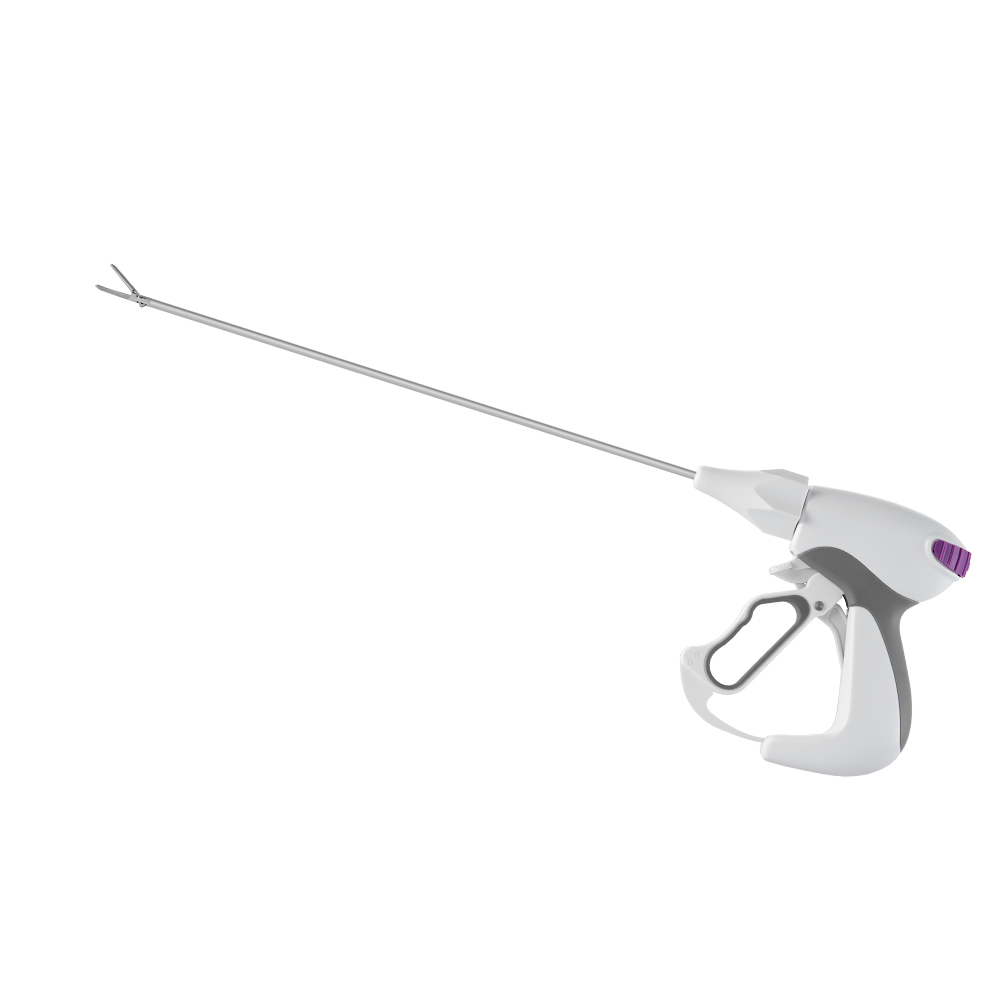
Securing a massive vessel requires significant jaw compression. You need a sturdy instrument to apply uniform pressure across a massive 7 mm diameter structure. However, modern surgical trends push in the exact opposite direction. Procedures like complex lymphatic transection demand slimmer, highly agile instruments. Working inside narrow pelvic spaces severely limits your overall mobility. You face a constant, challenging spatial trade-off. A bulky jaw cannot safely navigate tight spaces.
To solve this, biomedical engineering has shifted heavily toward anatomical conformity. Modern jaws feature curved, highly tapered designs. They significantly reduce the overall instrument footprint. Some newer models reduce their jaw profile by up to 30 percent compared to older generations. Crucially, they maintain the electrode length necessary to safely encompass a wide structure. A thinner profile vastly improves your line of sight. It allows you to navigate past delicate nerves and critical structures without accidental trauma.
We also see massive cross-specialty utility emerging globally. Advanced energy devices are expanding rapidly beyond traditional general and cardiovascular surgery. Urologists now deploy them for specialized procedures like complex vasectomies. Even advanced veterinary markets rely on these advanced tools for delicate animal care. Multi-functional jaws let you seal, cut, grasp, and dissect effortlessly. You can perform multiple sequential steps with one tool. This reduces overall instrument clutter on the surgical tray. It streamlines the entire operative workflow and minimizes required instrument exchanges.
Guide buyers to evaluate far beyond basic marketing claims. Use established clinical criteria to confidently shortlist devices. We developed a highly effective five-pillar framework to standardize medical procurement.
Reliability (Burst Strength): Does the seal hold under repeated physiological stress? You must demand ex vivo and in vivo burst pressure data from vendors. Confirm it exceeds 1,000 mmHg for 7 mm targets.
Safety (Thermal Spread): Heat severely damages adjacent healthy structures. The industry standard restricts side thermal damage to just 1–2 mm. You must protect vital nerve bundles at all costs.
Efficiency (Speed): Total procedure time directly impacts patient recovery. The average sealing time should stay well under 3 seconds per activation. Slow tools completely disrupt the surgical rhythm.
Consistency (Smart Feedback): Intelligent systems actively prevent dangerous human error. Does the generator provide clear auditory or tactile feedback? Good feedback prevents incomplete cuts and sticky tissue buildup.
Utility (Versatility): Can the instrument handle the majority of operative steps? A premier vessel sealer should eliminate the constant need for a separate grasper or blunt dissector.
Below is a comparison chart illustrating these core evaluation pillars.
| Evaluation Pillar | Standard 5 mm Requirement | Advanced 7 mm Standard |
|---|---|---|
| Reliability (Burst Pressure) | > 500 mmHg | > 1,000 mmHg consistently |
| Safety (Lateral Heat) | < 5 mm thermal spread | 1-2 mm thermal spread |
| Efficiency (Cycle Speed) | 4-6 seconds per seal | < 3 seconds per seal |
| Consistency (Feedback) | Continuous manual power delivery | Algorithmic tissue impedance feedback |
| Utility (Surgical Versatility) | Dedicated sealing and cutting only | 4-in-1: Seal, cut, grasp, dissect |
Translating clinical features to hospital economics reveals clear operational advantages. Device parameters directly impact your facility's daily workflow. Advanced devices feature durable non-stick coatings and highly precise thermal control. Reduced tissue sticking inherently means fewer incomplete cuts. Surgeons experience fewer frustrating instrument removals for manual cleaning. You save precious seconds every single time you activate the foot pedal or hand switch. These small margins accumulate significantly over a complex multi-hour operation.
We must strictly connect operating room efficiency to actual patient outcomes. Consider the deeply studied infection risk metric. It completely changes how clinical procurement views instrument selection. Every 10 minutes added to OR time due to inefficient sealing increases surgical site infection (SSI) risk by approximately 5 percent. Faster, more reliable tools directly protect your vulnerable patients. A highly capable vessel sealer essentially functions as a proactive infection safety measure. It minimizes the time internal tissues remain exposed.
Procurement teams constantly debate various standardization approaches. Hospitals face a practical implementation dilemma. Do you adopt single-use advanced sealers universally across all surgical departments? Or do you evaluate safe sterilization and reprocessing capabilities for specific clinical settings? Some specific clinical environments, like advanced veterinary clinics, often route certain tools through secure reprocessing workflows. This maintains access to advanced capabilities across varied practice types. Ultimately, standardizing on a highly versatile device drastically reduces your overall tray inventory. You eliminate redundant graspers, clips, and basic scissors. The measurable reduction in SSI rates and costly procedural delays easily validates the initial clinical implementation.
Achieving a 7 mm diameter capacity is the baseline expectation for any tier-one surgical device evaluated today. Surgeons cannot risk unexpected bleeding when navigating critical anatomy. As medical technology evolves, raw energy output matters far less than intelligent algorithm control.
Purchasing committees should focus their shortlisting heavily on the smart algorithms controlling the energy delivery. You must review the validated thermal spread data to ensure total patient safety. Prioritize modern jaw geometry during your evaluation. Slimmer, highly curved profiles allow surgeons to fully utilize that advanced 7 mm capacity even in the tightest anatomical spaces. Embrace these high standards to protect patients and streamline every surgical procedure.
A: Yes. While historically limited to 5 mm, modern ultrasonic devices use adaptive tissue technology and predictive algorithms to safely seal 7 mm vessels with burst pressures comparable to bipolar devices.
A: For safe clinical use, a sealed vessel should withstand a burst pressure of at least three times the normal human systolic pressure (often verified at >900-1000 mmHg in laboratory settings).
A: Even if a device can seal a 7 mm vessel, the lateral heat generated can damage surrounding nerves or tissue. Advanced devices limit thermal spread to 1–2 mm, maximizing safety in narrow operative fields.
A: Most advanced bipolar and ultrasonic sealers require proprietary, software-driven energy generators to monitor tissue impedance in real-time and provide the necessary safety feedback loops.


